
Steamboat study seeks 30 adults in recovery to test whether writing changes brain activity
The Imagine Project's three-week pilot pairs writing workshops with before-and-after brain scans and hopes to enroll 30 adults in recovery for sessions Dec. 3 to 14.


Key points
- The Imagine Project, a Colorado nonprofit, hopes to enroll 30 adults in recovery from substance use in a brain study in Steamboat Springs, with sessions Dec. 3 to 14 at Queer Futures.
- Participants get a resting EEG scan, attend two 60-minute writing sessions, do a writing session at home, then get a second scan and fill out a short survey. The total is about 3.5 hours.
- Meals are served at the sessions, and participants get a City Market gift card after the study: $50 for one scan or $100 for both.
- The study is paid for through a National Institutes of Health grant to WAVi, the Colorado company providing the scanners. Participants' scans will go into WAVi's research data.
- It hasn't been reviewed by an independent ethics board. WAVi determined it was exempt, and the nonprofit plans a reviewed study next year.
The Imagine Project, a Colorado nonprofit led by two Stagecoach residents, is recruiting adults in recovery from substance use for a brain study in Steamboat Springs in December. It hopes to enroll 30 people.
The three-week pilot is called "Rewiring Recovery: Exploring Brain Wave Changes with The Imagine Project." It pairs expressive writing workshops with brain-wave scans, known as EEGs, before and after, Executive Director Vicki Hagen wrote Monday in an email to local news outlets.
"Our goal is to learn whether participation in The Imagine Project's expressive writing process induces observable shifts in frontal brain activity," the study's flyer says.
The study is paid for through a National Institutes of Health grant to WAVi, the Colorado company providing the scanners, Hagen told the Independent. It hasn't been reviewed by an institutional review board, an independent ethics panel that reviews research on people. WAVi determined the study was exempt from that review, Hagen said, and The Imagine Project intends to run a study with that review next year.
What participants do
The study's interest form lays out three steps.
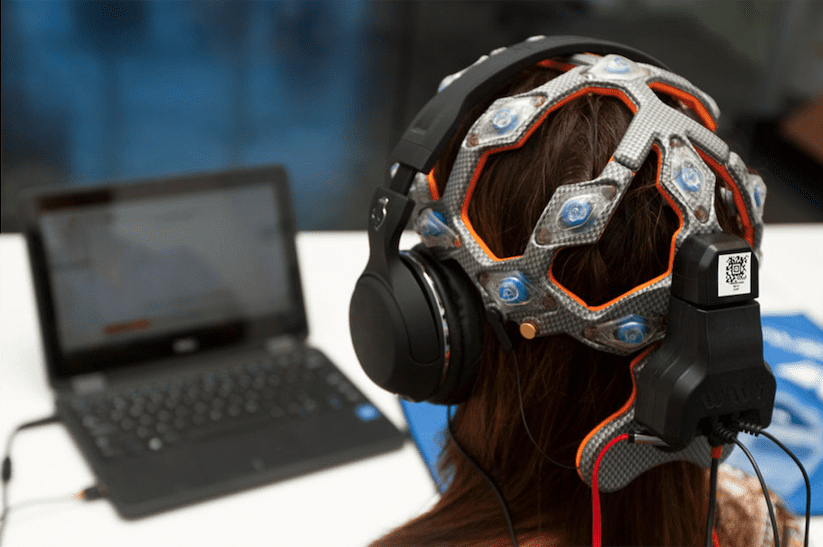
- A resting EEG scan within a week before the writing group starts. An EEG records the brain's electrical activity through sensors placed on the scalp. The scan takes 15 to 20 minutes, Hagen said, but appointments are 30 minutes to leave time for questions.
- Two 60-minute writing sessions in person in Steamboat and one writing session at home, all using The Imagine Project's writing process.
- A second scan within a week after the workshops end, followed by a short written survey about the experience.
The total commitment is about 3.5 hours over three weeks, Hagen said. Her announcement said 4.5 hours, a figure she said she didn't update after organizers changed some time requirements to make the study more accessible.
Scans and writing sessions will be held from Dec. 3 to 14 at Queer Futures, the Yampa Valley's LGBTQ+ resource center in Steamboat, Hagen said. Organizers aren't publishing the specific dates, citing participants' safety. More sessions may be added to fit people's schedules.
Meals are served at the in-person sessions. After the study ends Dec. 14, participants get a City Market gift card tied to the scans: $50 for completing one or $100 for completing both, Hagen said.
Who can take part
The study is open to adults 18 and older who are in recovery from substance use, "whether days, months, or years in," including people who have had recent setbacks or relapses, according to the flyer.
Participants don't need to be in a particular program, but they should be open to expressive writing in a group, the form says. No writing experience is needed; Hagen called the sessions a "welcoming, confidential space."
Who is running it
Dianne Maroney, a nurse with a master's degree in psychiatric and mental health nursing, founded The Imagine Project in 2015 and chairs its board, according to the nonprofit's website. She lives in Stagecoach.
The nonprofit has worked with all ages but has focused its outreach on young people and schools, Hagen said. It gives schools and youth groups free journals and lessons built on a seven-step writing process in which each sentence begins with the word "Imagine." Hagen said the group hopes the study will guide more of its work in recovery.
Hagen, who also lives in Stagecoach, was previously deputy director of Integrated Community, according to the nonprofit's team page.
Hagen or Maroney will lead the writing sessions. Hagen said she is a former health coach and Maroney is a psychiatric and mental health nurse. They are prepared to make "warm handoffs" to local mental health professionals if a participant needs support, she said.
The study is led by The Imagine Project in partnership with WAVi Medical, the flyer says. WAVi, a Denver company, says its EEG system is cleared by the U.S. Food and Drug Administration to record, display and store brain-wave data.
WAVi is providing the scanners and will read the scans, Hagen said. The scans will be stored in WAVi's secure system, where only Hagen, Maroney and WAVi's medical team can see them. Participants' scans will also be added to WAVi's research data and used in its future studies, she said.
What participants agree to
Participants sign a three-page consent form, which Hagen shared with the Independent. It says what participants write stays confidential and won't be collected for publication.
Raw data from their scans will be shared with WAVi "for processing, technical analysis, and database benchmarking," the form says. Only data stripped of names and other identifying details will be published. Participants can withdraw at any time and ask that their identifiable records be destroyed.
What a pilot can show
Researchers have studied expressive writing for more than 30 years, usually by asking people to spend 15 to 30 minutes writing about an emotionally difficult event, The Imagine Project's website says.
A 2006 review of 146 randomized studies of this kind of personal disclosure found a positive, statistically significant average effect. The review was published in the American Psychological Association's journal Psychological Bulletin. Its author noted the effect could be seen as small by traditional standards but argued it still mattered, because disclosing costs almost nothing.
The Steamboat study won't include a separate group that skips the writing. Organizers will look at the group's scans together and compare them with participants in WAVi's previous and future research, Hagen said.
Participants will see the findings first. The Imagine Project and WAVi plan to co-author a paper expected to be published in the first quarter of 2027, and a larger study could follow that year if the early findings warrant it, Hagen said.
How to take part
People interested in the study fill out an online interest form, and Hagen then schedules their scans and writing sessions.
- What: Rewiring Recovery, an exploratory study of expressive writing and brain activity
- Who: Adults 18 and older in recovery from substance use, at any stage; the goal is 30 participants
- When: Dec. 3 to 14; the first scan is within a week before the writing group starts
- Where: Queer Futures, Steamboat Springs
- Time: About 3.5 hours over three weeks
- For participants: Meals at the in-person sessions; a City Market gift card after Dec. 14, $50 for one scan or $100 for both
- Sign up: Rewiring Recovery interest form
- Questions: Vicki Hagen, executive director, vicki@theimagineproject.org or 206-355-8515