
Lodging taxes for roads, safety and housing fall short in Routt County and slide in Steamboat
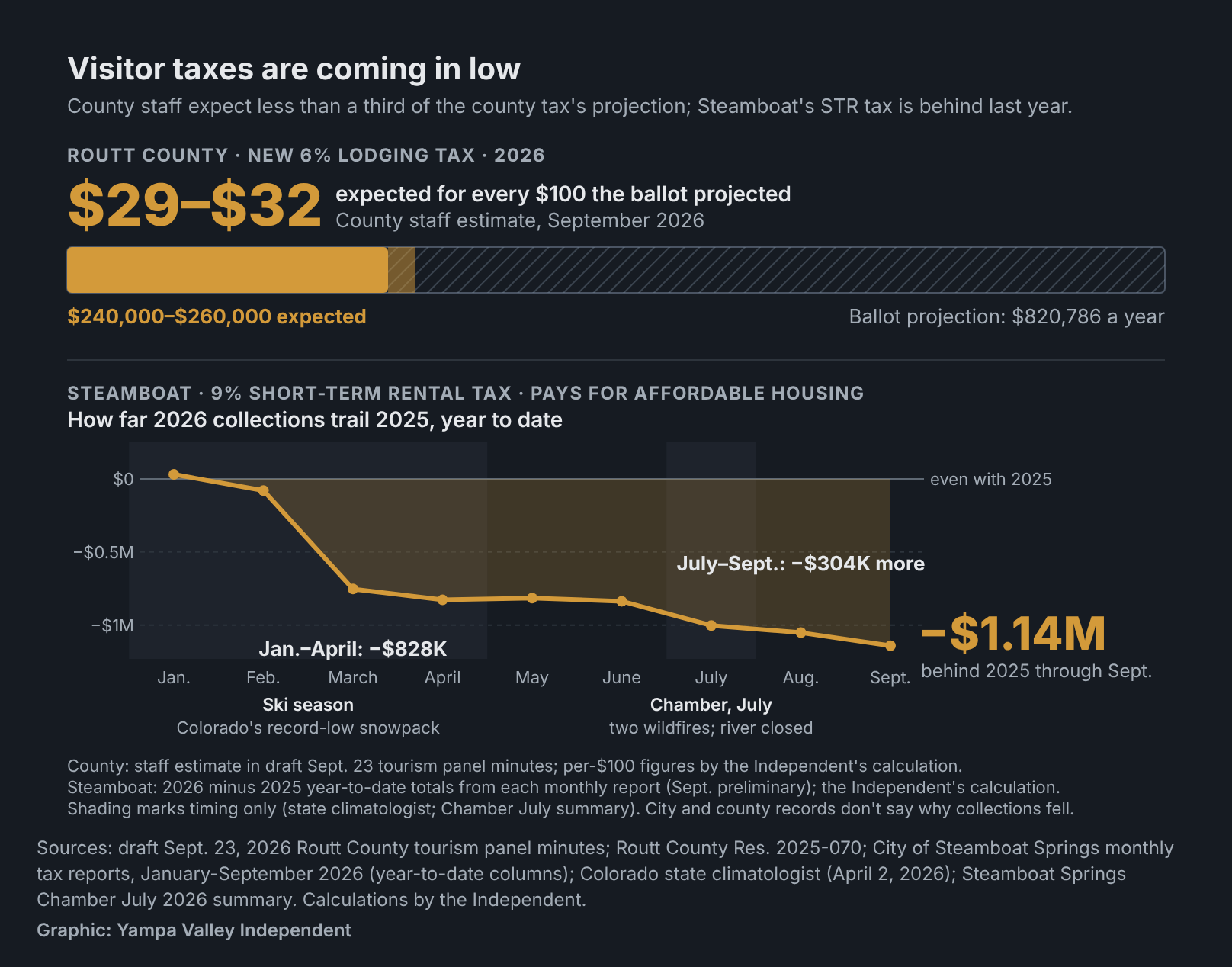
Routt County's new lodging tax is on track for less than a third of its $820,786 ballot projection, by county staff's estimate. Steamboat's short-term rental tax, which pays for affordable housing, is down $1.14 million through September.

Key points
- Visitor taxes that pay for roads, public safety and affordable housing are bringing in less than planned in Routt County and less than last year in Steamboat.
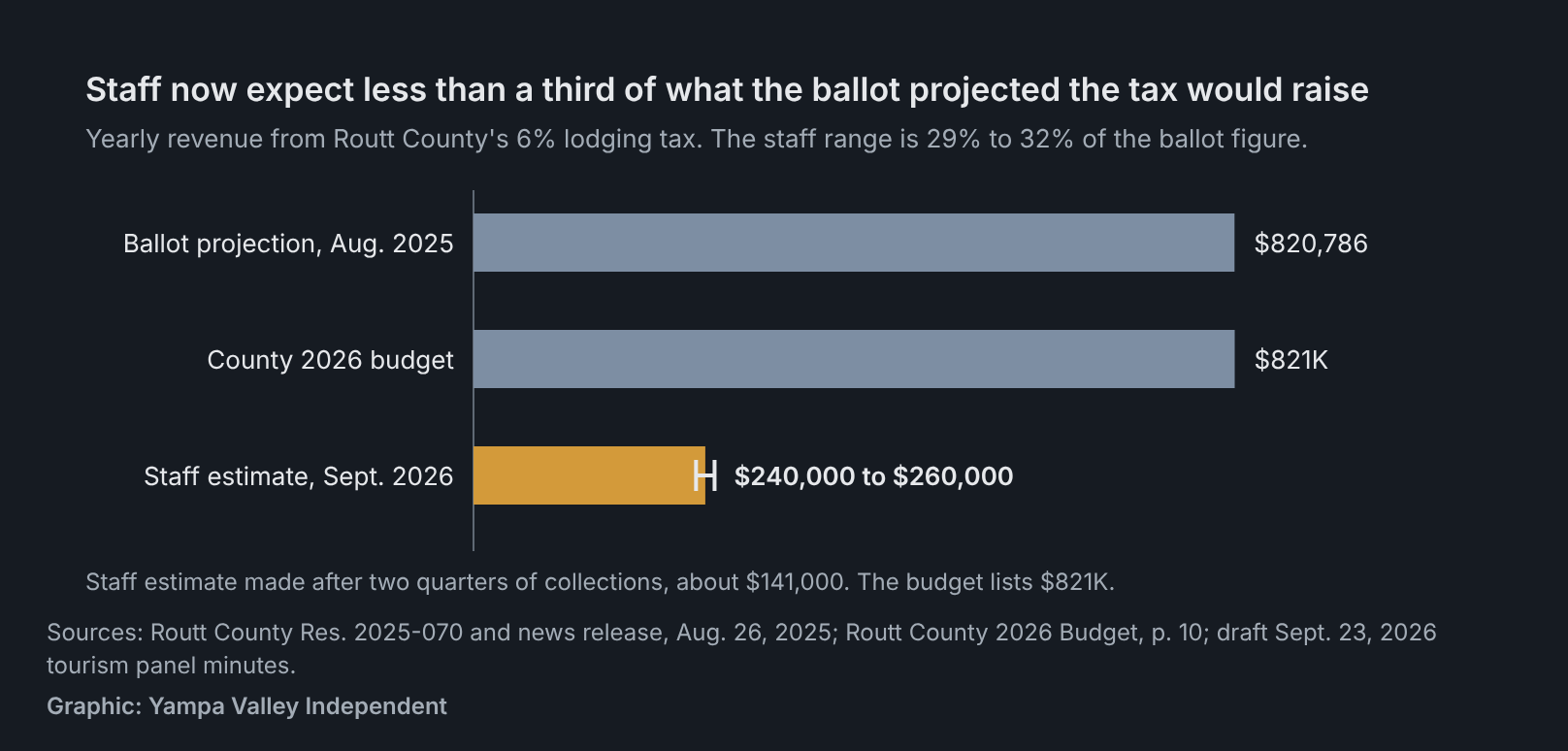
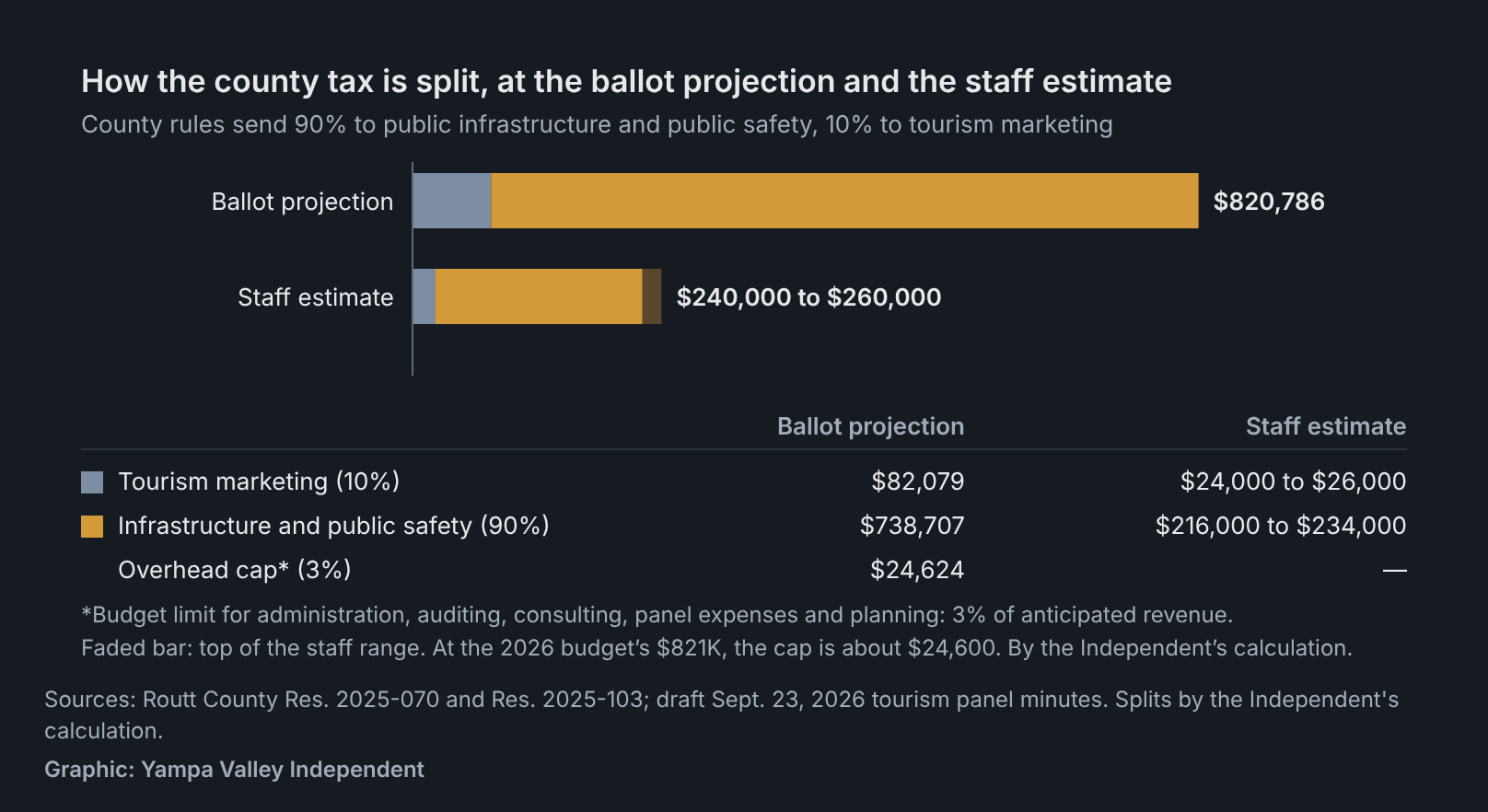
- Routt County's new 6% lodging tax brought in about $141,000 in its first two quarters. In September, county staff estimated $240,000 to $260,000 for the year, 29% to 32% of the $820,786 a year projected in the ballot question, by the Independent's calculation.
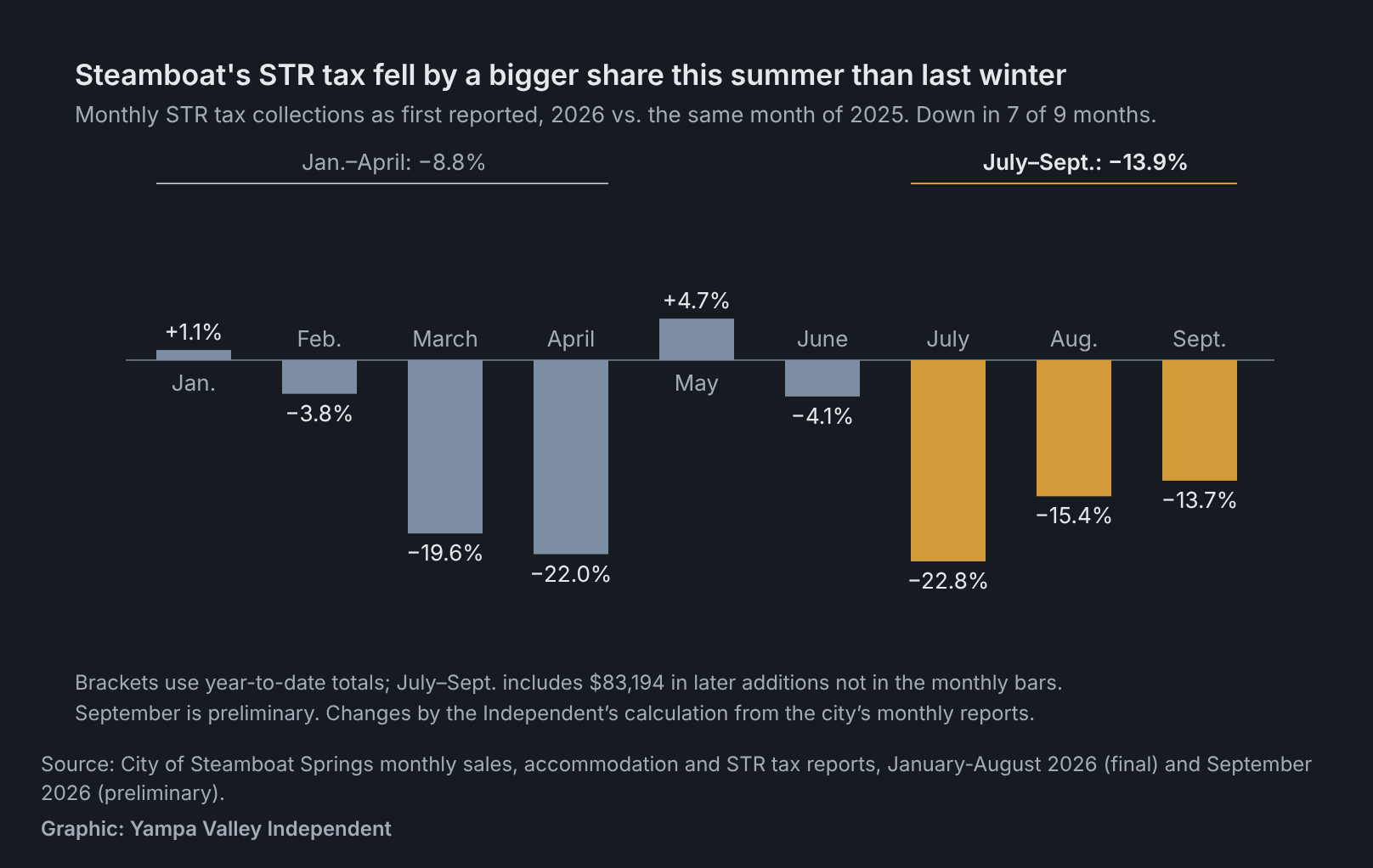
- Steamboat's short-term rental tax is down $1.14 million, or 9.2%, through September, and it fell by a bigger share from July through September than from January through April, though the January–April drop was larger in dollars.
- Last winter was Colorado's worst for snowpack on record, the state climatologist said, but the city's and county's records don't say why collections are down. The Steamboat Springs Chamber said July occupancy decreased with the onset of two wildfires and that drought closed the Yampa River to recreation.
STEAMBOAT SPRINGS — Two taxes that turn visitors' lodging bills into money for local roads, public safety and affordable housing are bringing in less than planned in Routt County and less than last year in Steamboat, records show.
Routt County's 6% lodging tax, which voters approved in November 2025 for lodging outside Steamboat Springs and Hayden, brought in about $141,000 in what county minutes call "qualifying" lodging tax revenue in its first two quarters. In September, county staff estimated $240,000 to $260,000 for the year, less than a third of the $820,786 a year projected in the ballot question (29% to 32%, by the Independent's calculation).
In Steamboat, the 9% tax on short-term rentals, which pays for affordable housing, was down $1.14 million, or 9.2%, through September from the same months of 2025, according to the city's preliminary September report. It fell by a bigger share this summer than during last winter's record-low snow.
For the county, that means less than budgeted for the public infrastructure and public safety that 90% of the tax must pay for, including the roads, emergency response and law enforcement commissioners cited when they asked voters for it. For Steamboat, it means less money for affordable housing than a year earlier.
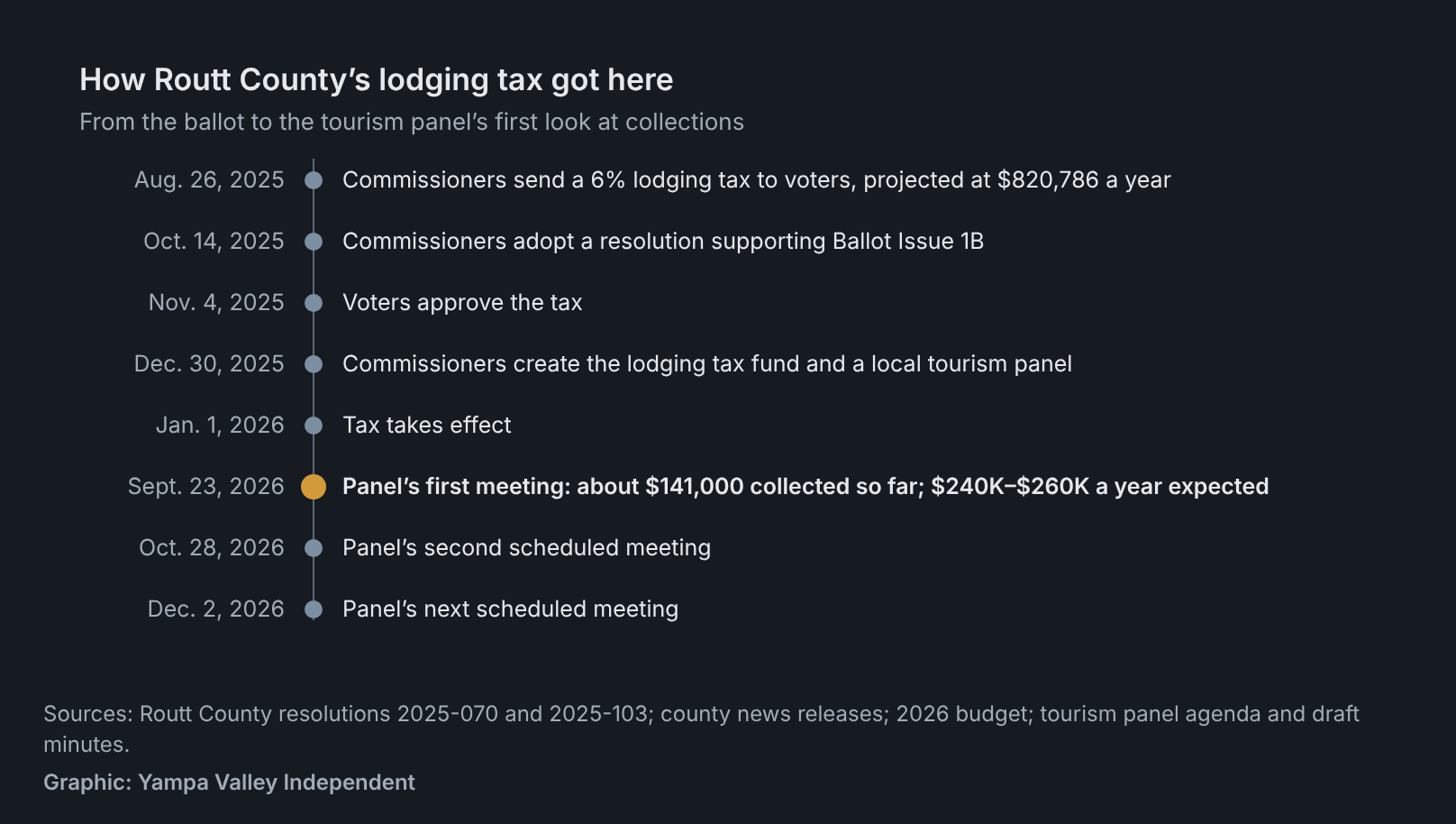
The county figures come from draft minutes of the county tourism panel's Sept. 23 meeting, where Finance Director Shawn Sonnkalb "cautioned that the lodging tax is new and collections may fluctuate as additional data becomes available," the minutes say.
When commissioners sent the tax to voters, a county news release said it was "projected to generate approximately $820,786 annually." The county's 2026 budget counted on about that amount: "Total revenue is $821K."
In Steamboat, the drop continued after the ski season. Through April, short-term rental tax collections were down 8.8% from the same months of 2025, the city's April report shows. From July through September, they were down 13.9%, by the Independent's calculation from the city's year-to-date totals, though winter's drop was bigger in dollars: $827,504, against $304,438 in the summer months.
The city's Nov. 2 news release reports the declines without giving a reason. The county's draft minutes don't compare collections with the ballot figure or say why they are lower.
A small tax base
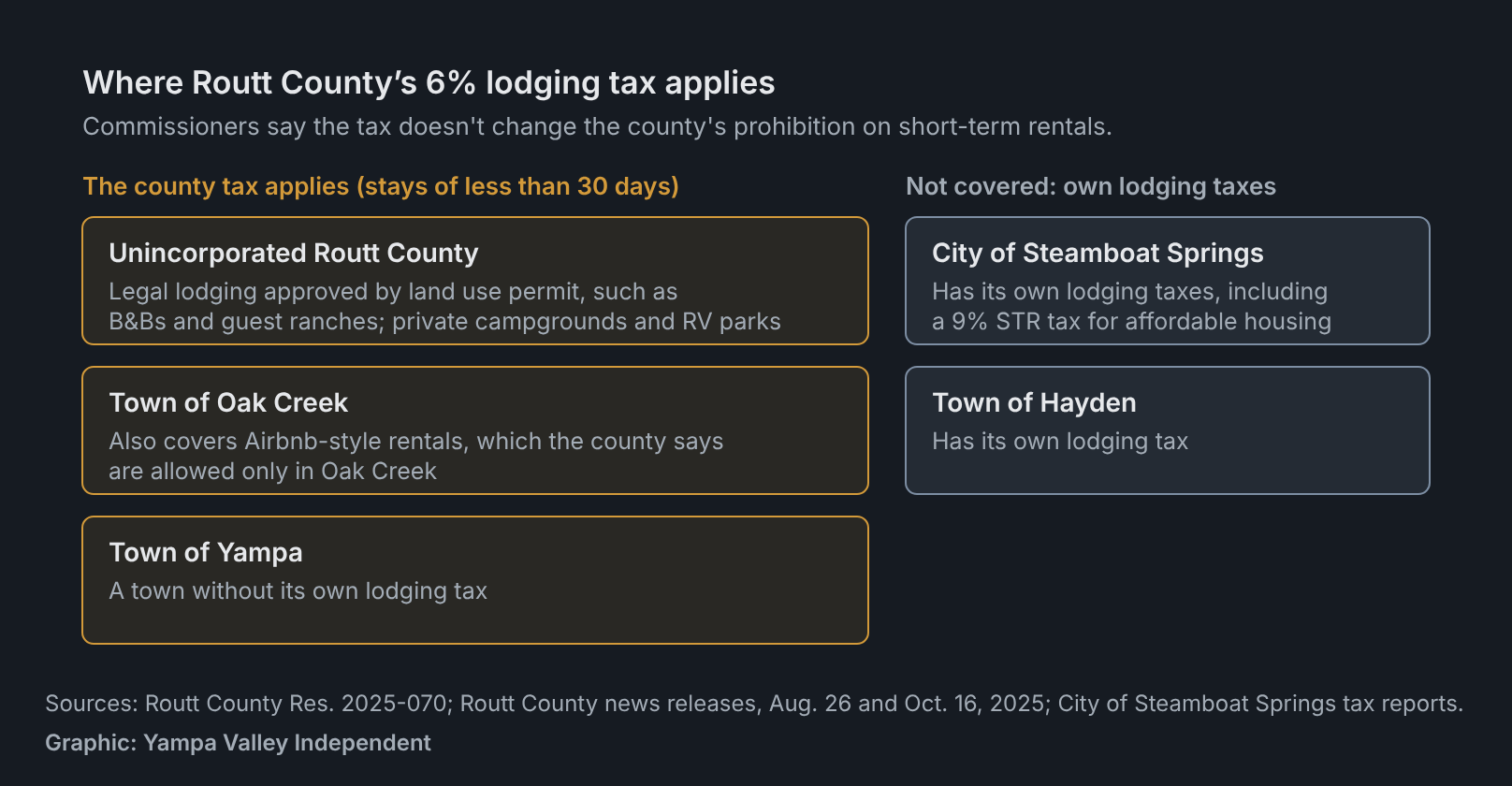
The county tax applies only in unincorporated Routt County and the towns of Oak Creek and Yampa, because Steamboat and Hayden levy their own lodging taxes. Short-term rentals "have never been allowed in unincorporated Routt County without a permit or planned unit development approval," commissioners wrote in an October 2025 resolution supporting the tax, as quoted in a county news release. The tax doesn't change the county's prohibition on short-term rentals and instead applies to "legal lodging approved through land use permits such as bed and breakfasts and guest ranches," the resolution said. An August 2025 county news release also listed private campgrounds and RV parks not on state or federal land, said Airbnb-style rentals were "only allowed in the Town of Oak Creek" and said lodging owners remit the tax to the state quarterly.
By law, 10% of the money must go to advertising and marketing local tourism, and the rest to public infrastructure and public safety. At the staff estimate, the tourism share would be about $24,000 to $26,000 a year, according to the minutes.
The county's new tourism panel held its first meeting Sept. 23, 267 days after commissioners passed the resolution creating it, and aims to have its framework "sufficiently developed for presentation" to commissioners "in early 2027," according to the minutes. The Independent asked the county Tuesday when the panel's members were appointed.
Steamboat: the short-term rental tax fell by a bigger share in summer
Steamboat's 9% short-term rental (STR) tax, which pays for affordable housing, fell in seven of the first nine months of 2026 as each month was first reported, including 19.6% in March and 22.8% in July. The city's year-to-date totals are $88,350 higher than the sum of those first-reported months, by the Independent's calculation, and the reports don't say why; the Independent is asking the city for revised figures.
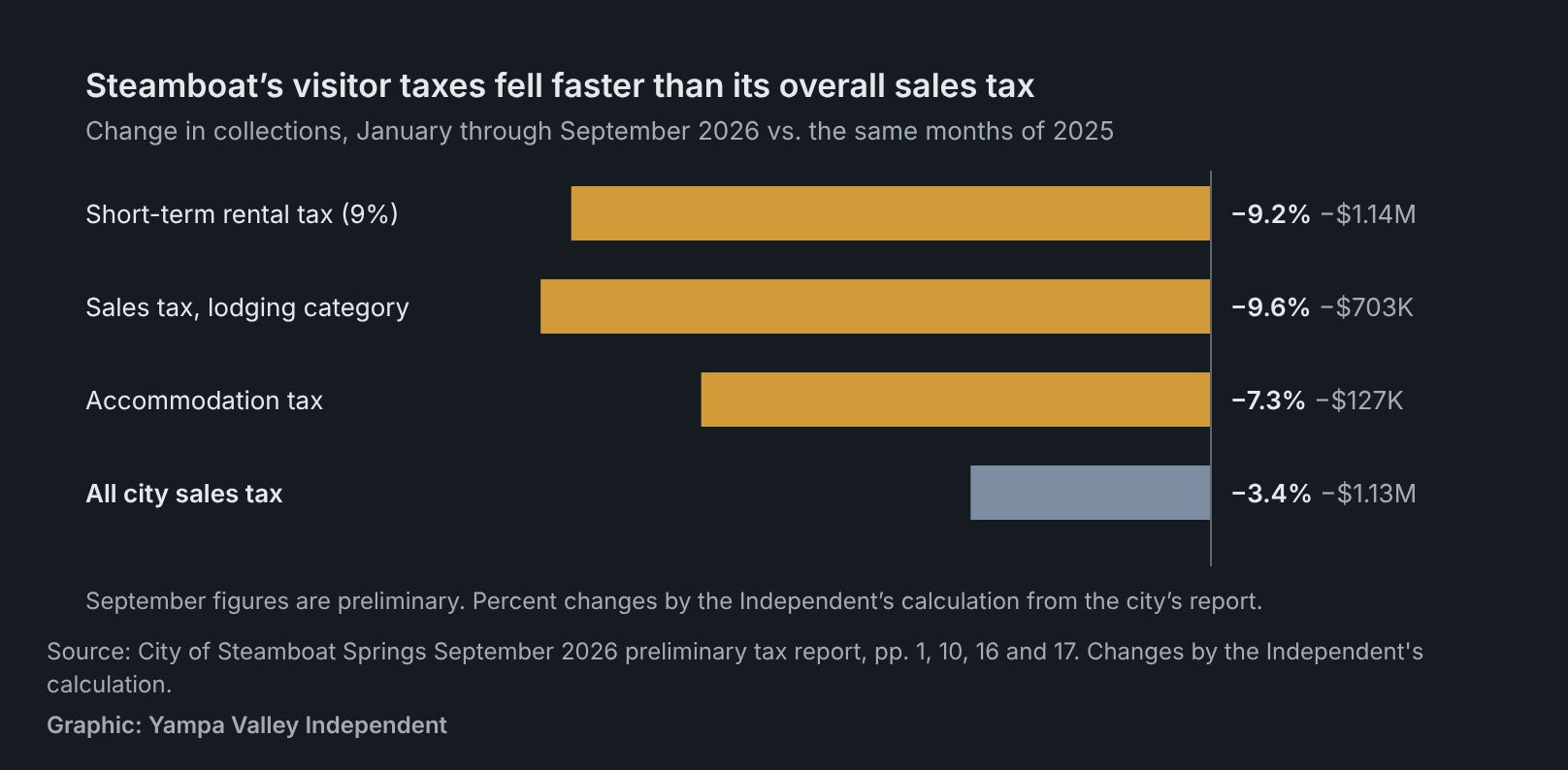
Other visitor taxes fell, too. Through September, the city's accommodation tax was down 7.3% and sales tax from the lodging category 9.6%, while overall city sales tax was down 3.4%.
In its July summary, the Steamboat Springs Chamber said total occupancy started strong compared with a year earlier but "decreased with the onset of two wildfires in the area," and that "ongoing drought conditions closed the Yampa River to recreation."
What the snow and the science say
Last winter set records. "It's now safe to conclude that this has been the worst year for Colorado snowpack in recorded history," State Climatologist Russ Schumacher of Colorado State University wrote April 2.
Statewide, the governor's office said in July that some communities, including mountain resort destinations, "have experienced seasonal declines in visitation as high as nearly 40%" because of weather-related challenges, including lower-than-average snowfall and nearby wildfires; the release didn't name the communities. It said indicators suggest competition and federal policy uncertainty are also contributing to slower growth, and that Colorado traveler spending set a record $29.2 billion in 2025, up 2%.
Federal and university research links warming to declining western snowpack and shorter U.S. ski seasons, though a 2024 global study projects that Rocky Mountain ski areas "will remain relatively snow reliable." "We are probably past the era of peak ski seasons," Daniel Scott, a University of Waterloo geography professor, said in a 2024 university release. The release said the study found the U.S. ski industry has lost more than $5 billion over the past two decades "due to human-caused climate change," with lost skier visits and added snowmaking costing an average of $252 million a year from 2000 to 2019.
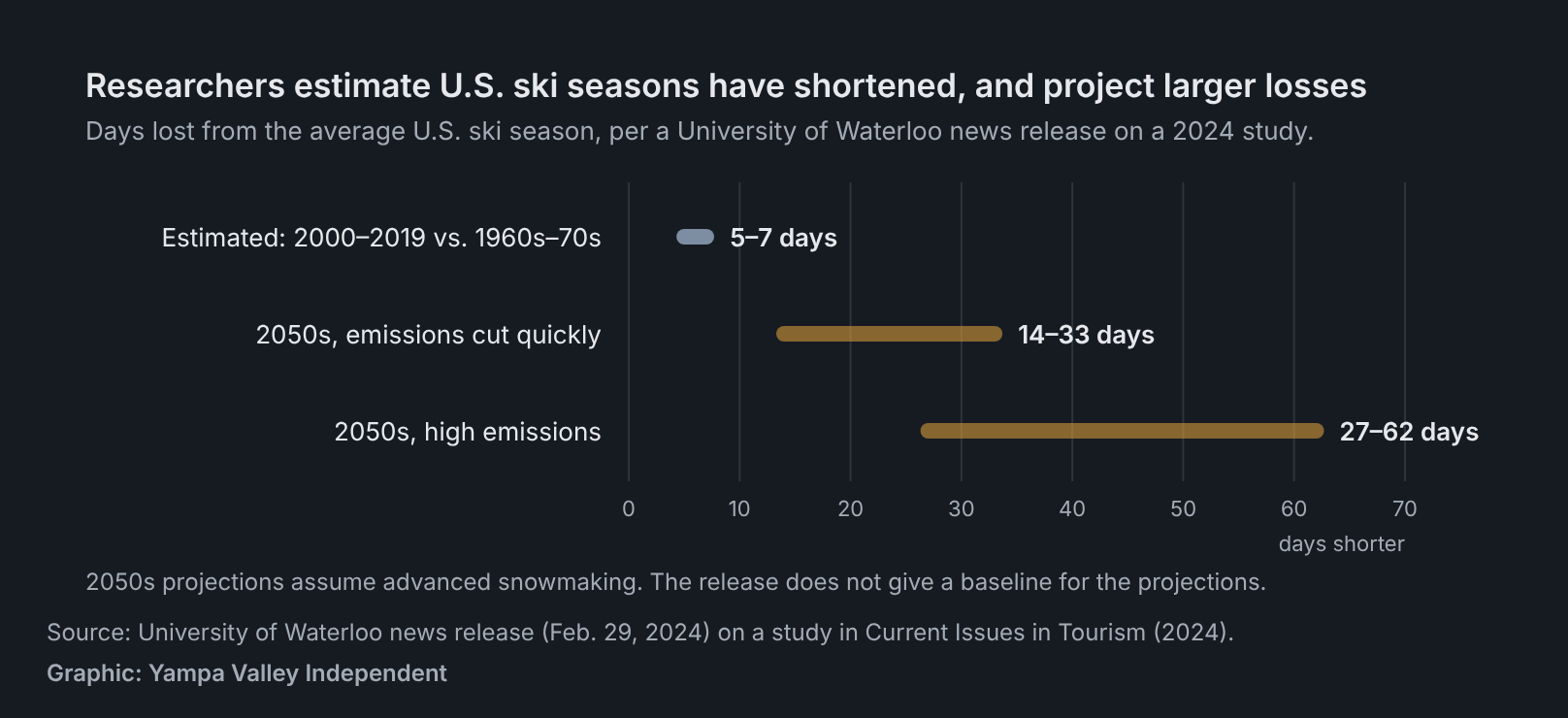
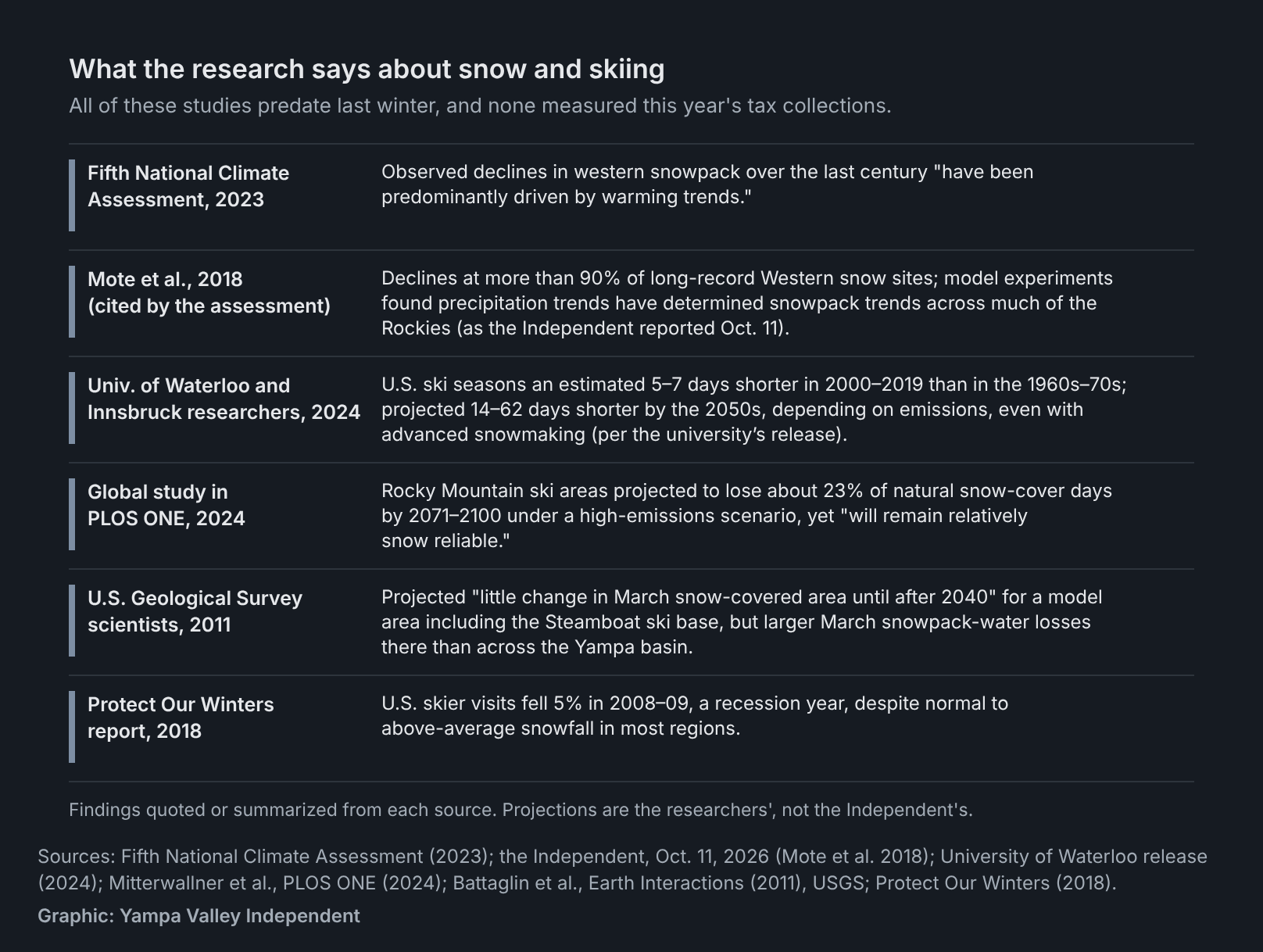
All of those studies predate last winter, and none measured this year's tax collections. Neither the studies nor the state climatologist's April post attributes last winter's record-low snowpack to climate change.
Lodging jobs rose in early 2026 but stayed below 2024
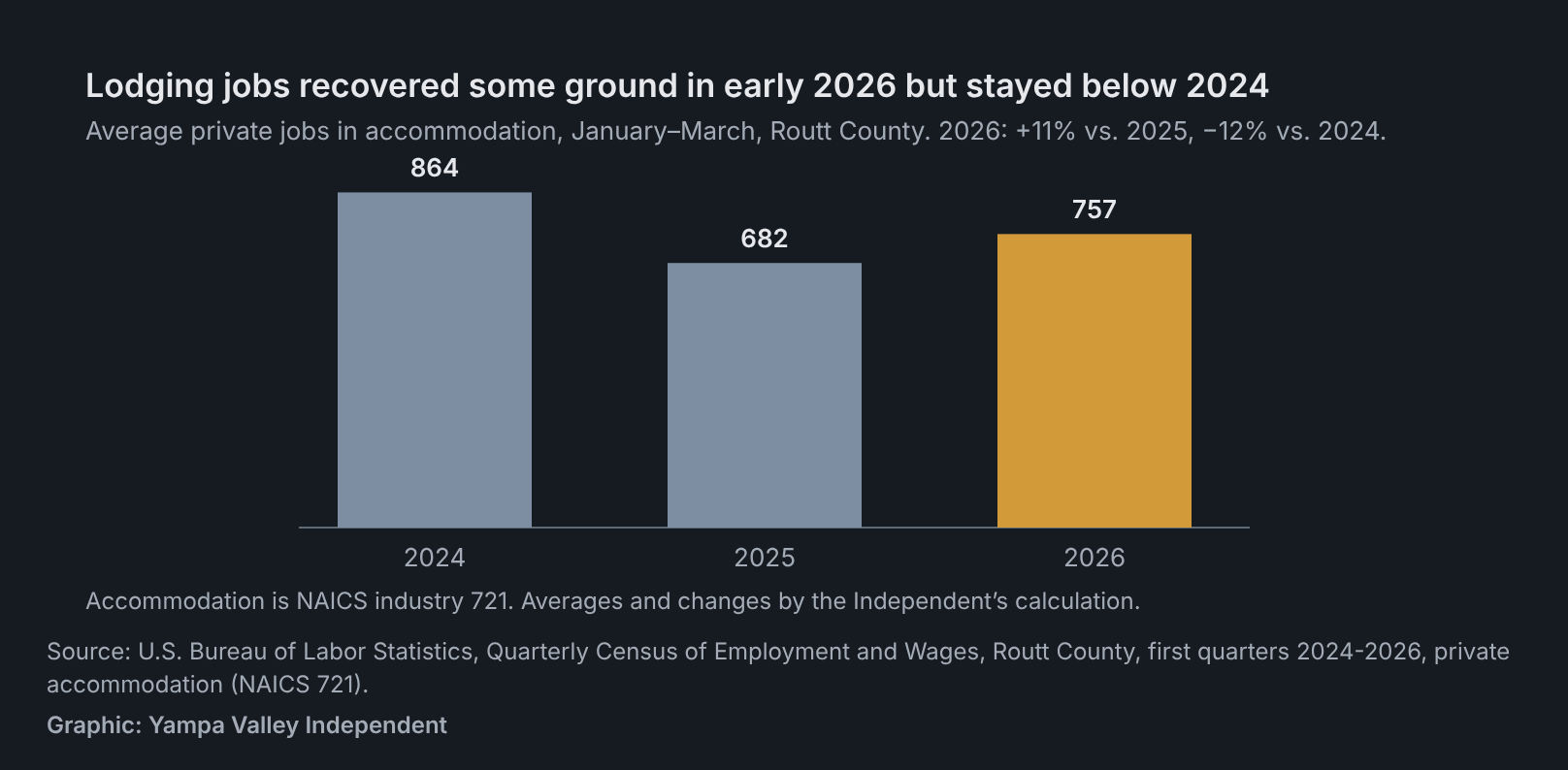
Routt County's private lodging employers reported an average of 757 jobs in January through March 2026, up 11% from 682 a year earlier but 12% below 864 in early 2024, by the Independent's calculation from federal Quarterly Census of Employment and Wages data. Total jobs in the county were 0.4% higher than in early 2025, by the same calculation. These figures cover only January through March.
The county's case
Commissioners put the tax on the ballot citing "ever-increasing development and tourism-related pressures," including on roads, emergency response and law enforcement, and the loss of state and federal funding. A county tax would "provide more equalized taxes on lodging throughout Routt County," their referring resolution said, because the larger municipalities already levy their own.
The minutes don't say which months the $141,000 covers or how staff projected a full year from two quarters. The Independent asked Routt County officials those questions Tuesday morning, along with how the county arrived at $820,786, and is seeking comment from the City of Steamboat Springs. The story will be updated with their responses.
Disclosure: Michael McLarney, the Independent's owner and editor, is married to Emily McLarney, who serves on the City of Steamboat Springs' Ad Hoc Housing Advisory Committee, which reviews requests for short-term rental tax money.
How we did this
The Independent used the City of Steamboat Springs' monthly tax reports for January through September 2026 and Routt County's resolutions, news releases, 2026 budget and tourism panel records, each archived with a SHA-256 fingerprint. Monthly STR figures are as first reported; comparisons of periods use the city's year-to-date totals, which run $88,350 above the first-reported months. Percentages and job averages are the Independent's calculations from those records and federal Quarterly Census of Employment and Wages data. Research findings come from the reports, studies and university release named in the story; the Waterloo findings come from the university's release, and the Mote finding from the Independent's Oct. 11 story. The full source list, claims ledger and calculations are available on request.
What's next
- Nov. 10, 5 p.m.: Steamboat Springs City Council is scheduled to hold the second reading of the 2027 budget, according to its tentative agenda, in Centennial Hall, 124 10th St., and on Zoom (meeting ID 985 289 877). Public comment is taken on each public hearing item.
- Nov. 21: Steamboat Resort's scheduled opening day.
- Dec. 2, 3 p.m.: The county tourism panel's next scheduled meeting, according to its Oct. 28 agenda.