
Steamboat's 911 talks with Routt County "broke down," city attorney says, as the city's estimated dispatch bill climbs toward $1 million
The county's new dispatch deal was meant to start Jan. 1. Steamboat still hasn't signed it, the city says the deal gives it no authority over costs, and council takes its case to the commissioners Nov. 17.


Key points
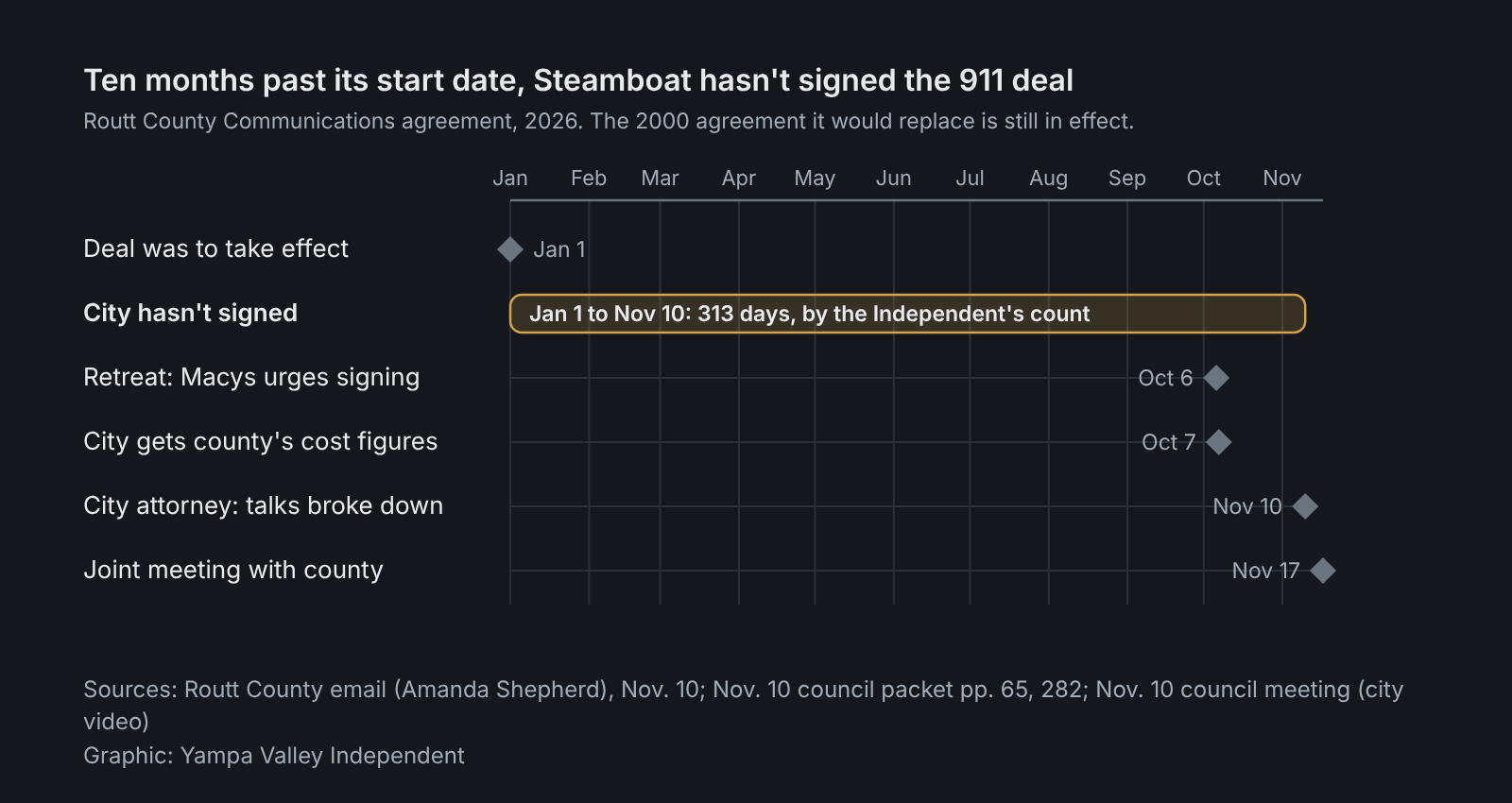
- Routt County's new 911 dispatch agreement was meant to start Jan. 1, 2026. Steamboat still hasn't signed it, and the city attorney told council the talks "broke down" over how the city could get its capital money back if it left.
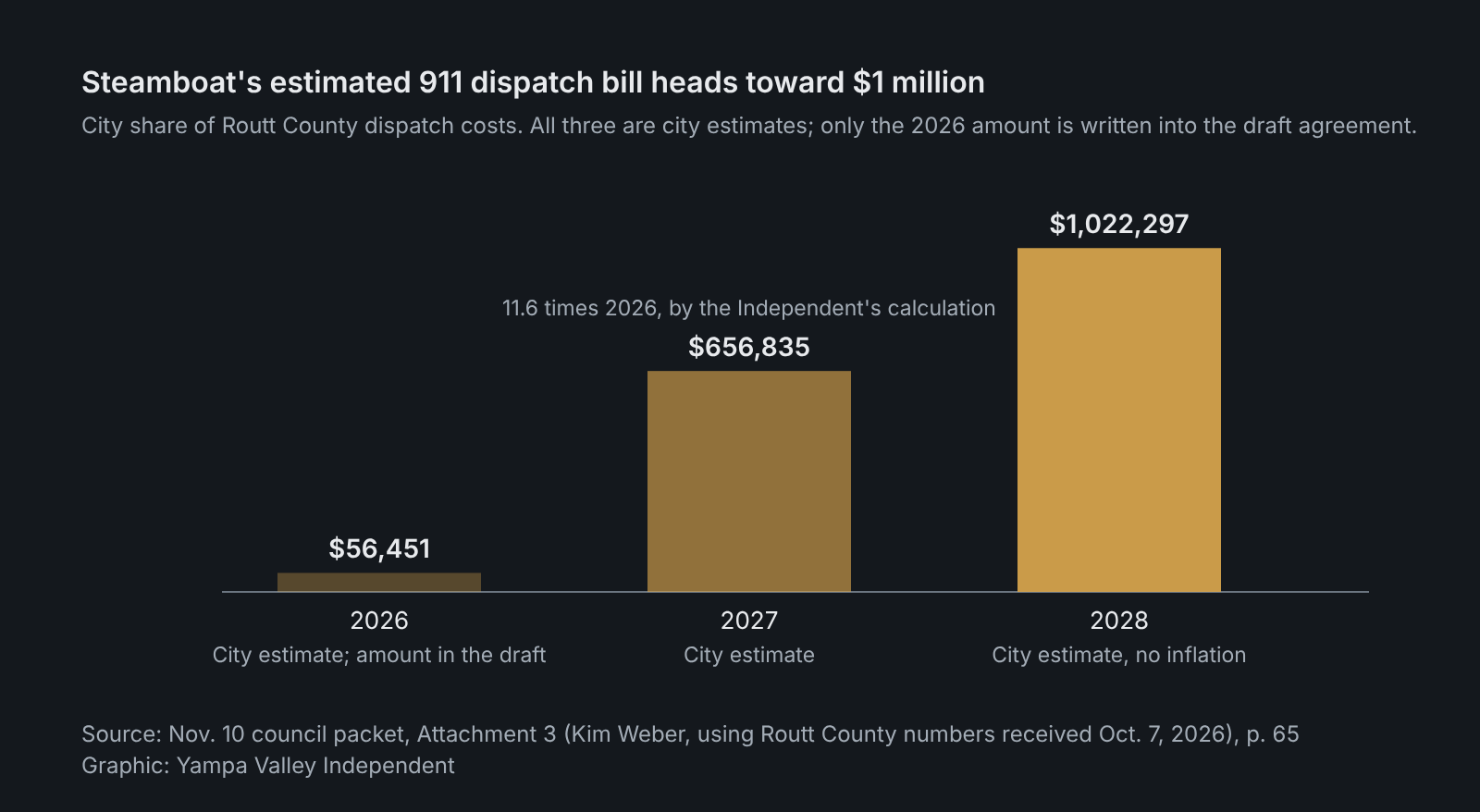
- The city finance director estimates Steamboat's share at $56,451 this year, $656,835 in 2027 and $1,022,297 in 2028 as the county phases in its full costs. Only this year's amount is in the agreement.
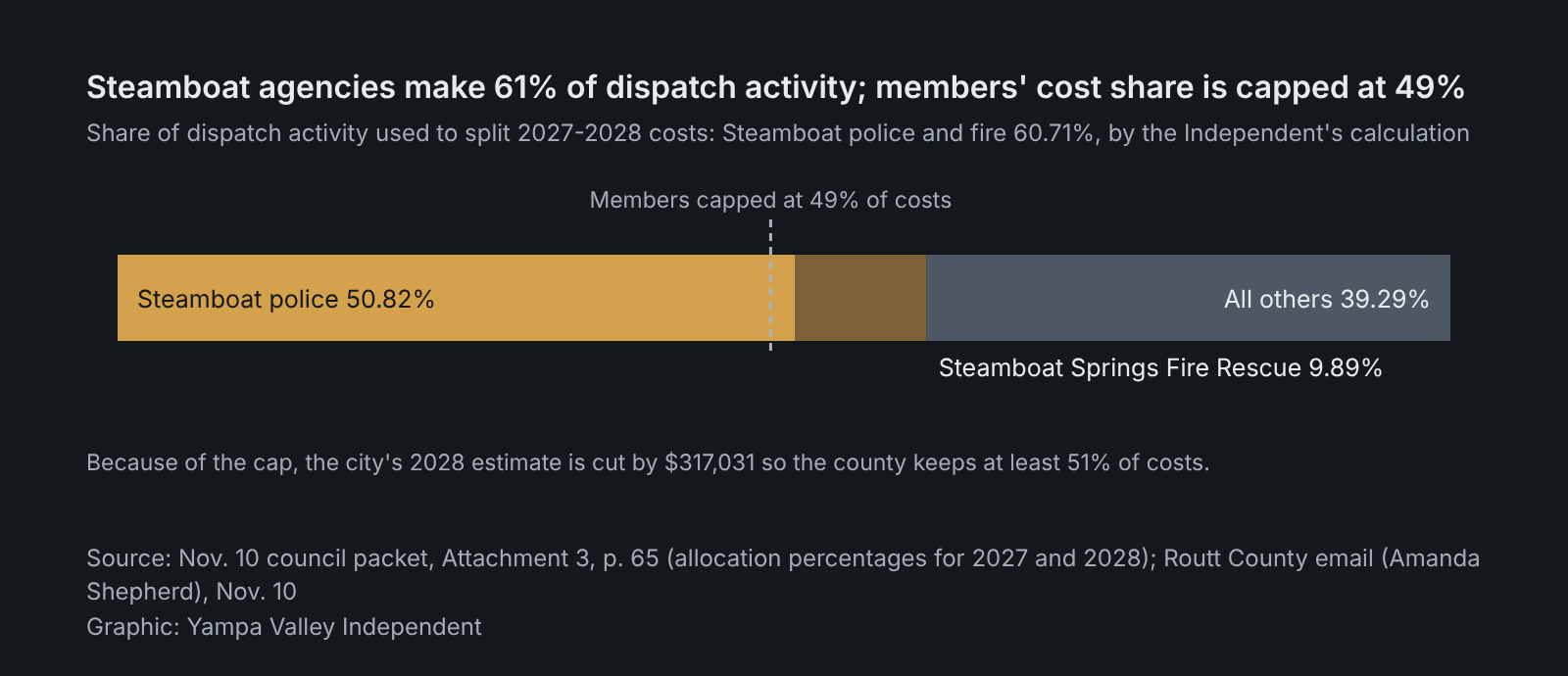
- The county owns the center and keeps final say over its budget, and city staff say the draft lets it end service in the city if the fee isn't paid. Its cap on members' share lowers the city's 2028 estimate by $317,031 and, the finance director said, keeps the county in the majority.
- Council wants a 10% cap on yearly budget increases and a unanimous finance committee vote on major capital spending, and takes those asks to the county commissioners Nov. 17. Members split on how hard to push; Council member Bryan Swintek said the city is being "bulldozed," while Council member John Agosta said he was optimistic about next week's meeting.
- The finance director said the county told her its overhead charge "will likely go up" because of the time its commissioners, attorney and manager "have been spending on this."
Routt County's new 911 dispatch agreement was meant to take effect Jan. 1, 2026. Steamboat Springs still hasn't signed it, and the city attorney told City Council on Tuesday that the negotiations "broke down."
The county says the city "has not provided any alternative language." On Tuesday, council agreed on the changes it wants and will press them with the county commissioners at a joint meeting Nov. 17, as city staff had recommended.
City Manager Tom Leeson summed up council's asks: a 10% cap on annual budget increases; approval by a unanimous vote of the finance committee for major capital spending and any budget increase over 10%; and county overhead paid from the county's general property tax.
What's at stake is the city's bill. Finance Director Kim Weber estimates Steamboat's share of dispatch costs at $56,451 this year, $656,835 in 2027 and $1,022,297 in 2028, using county figures she received Oct. 7. By the Independent's calculation, the 2027 figure is more than 11 times this year's. The jump comes as the county phases in its full costs: 70% of personnel and operating costs this year, all of them in 2027, then its overhead and capital replacement in 2028. Only this year's amount is in the agreement, Weber said; the later years follow the county's budget, and staff wrote that the agreement gives the city no authority over that budget.
How the talks broke down
City Attorney Dan Foote said he told the county he "didn't think this was a very good deal for the city," but that a "breakup provision" letting Steamboat get out later "might be workable." The sticking point was paying the city back for its share of capital costs if it left: "that's where we broke down," he said.
Foote said he was planning for the worst case: "How do we mitigate that?" Under the county's draft, staff wrote, the city would put $180,000 to $200,000 a year into a capital replacement fund that "would be abandoned" if it later withdrew; the agreement repays only an average of capital additions for the year of withdrawal and the two years before it.
On Tuesday, a council member objected that "we're all thinking we're going to get out of it and how we're going to get our money back." Foote agreed the city should "focus on the changes that are going to make the agreement work. Not the ones that are going to make the breakup work."
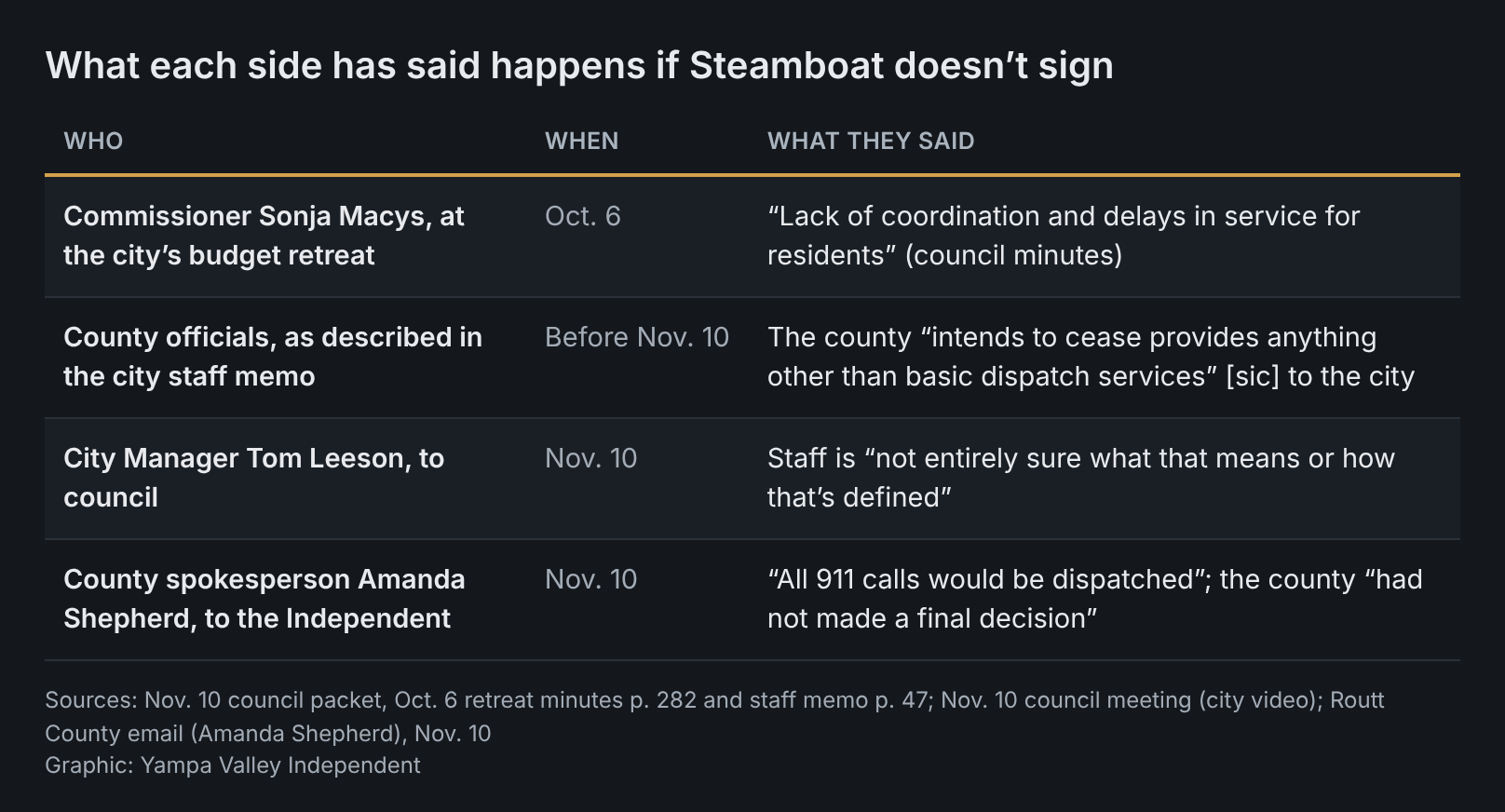
City Manager Tom Leeson told council the county has said it would provide only basic dispatch if the city doesn't sign, but staff is "not entirely sure what that means or how that's defined." Asked how that fits the 2000 agreement still in force, the county was "unable to provide an answer," he said.
The county told the Independent on Tuesday morning that basic dispatch is defined in the draft agreement and that under it "all 911 calls would be dispatched," while non-emergency dispatch, after-hours government call handling, and radio programming and maintenance support "would not be included." It didn't say what would happen to the 2000 agreement. Foote told council the county attorney wrote him that ending that agreement "would be something that they would be considering."
Other questions are still open. The county has offered language requiring a finance committee, with city, county and Hayden members, to approve capital spending outside the center's replacement plan, but staff couldn't say whether that approval would take a unanimous or a majority vote. Nor could staff say whether the county could keep collecting 911 phone fees from city accounts if it ended the 2000 agreement.
Where the county's leverage comes from
The county owns the dispatch center, employs its staff and owns its equipment. A new communications board and the finance committee would advise; the county commissioners keep final say over the budget.

City staff wrote that the draft also lets the county end dispatch service in the city if Steamboat fails to appropriate and pay the fee, and that "as a practical matter, the proposed IGA deprives the City Council of its usual discretion over budgetary decisions relating to the Dispatch Fee."
When the city pointed out that it would soon pay more than half the cost and asked for more control, Weber said, the county answered with a cap: members are charged no more than 49% of total costs, and the county covers the rest. "So they have majority share," Weber said. The cap also lowers the city's 2028 estimate by $317,031.
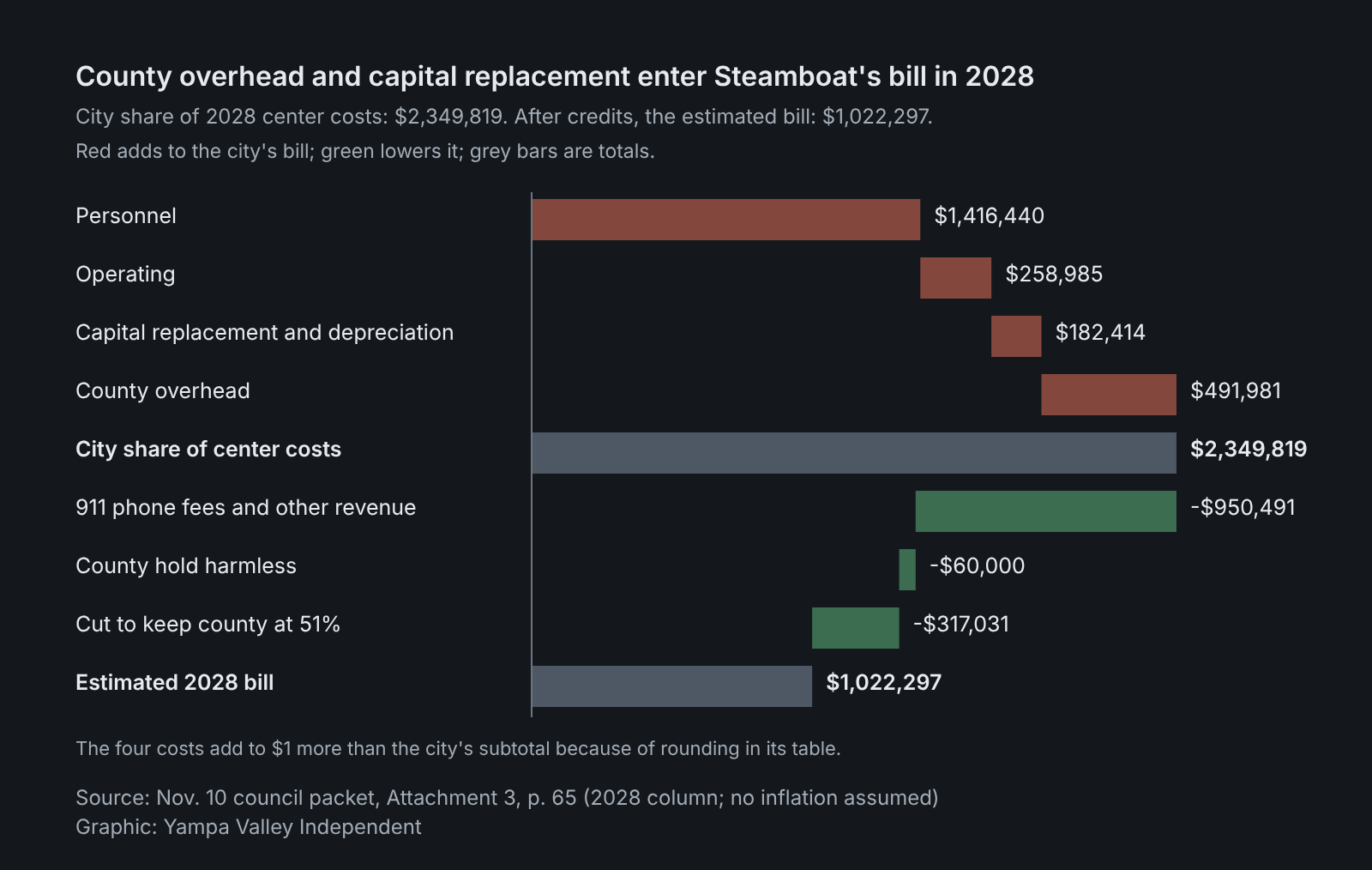
The county collects the 911 fees on phone bills, budgeted at $1,393,049 for 2027. City staff estimate more than $800,000 of that comes from city accounts; the county says the city's share "cannot be determined" because the state Public Utilities Commission "does not provide that data." The city's own estimate credits $845,720 of those fees against its share in each of 2027 and 2028.
Fire Chief Chuck Cerasoli called finding another dispatch center "the nuclear option": "daunting and challenging, but not impossible." Staff wrote that exploring another provider would likely take several months.
The county's case
County spokesperson Amanda Shepherd wrote that the county allocates its support costs under federal cost rules and that "this method accurately reflects what it costs to run the Dispatch Center"; members are charged "only after E-911 fees and other revenues are applied." The county holds each agency harmless for its first $30,000 in fees, "an acknowledgment that our rural fire districts have limited funding sources." The depreciation charge in the fee, she wrote, is "the method the County uses to plan for and help fund the replacement of assets," and covers equipment and areas specific to dispatch. It has "proposed language to further empower the Finance Oversight Committee," she wrote, and "had not made a final decision on how to move forward if the City does not sign."
Leeson relayed County Manager Jay Harrington's view that elected officials don't want to give up their decisions over the budget: "I understand that perspective," Leeson said. Foote said the county follows the model Pitkin and Summit counties use, which he called "outliers." Weber said the county has "been very transparent" with its numbers.
The overhead question
About $800,000 of the county's overhead, including its commissioners, county manager, human resources, IT and legal staff, is charged to dispatch, Weber said. The county told her that figure "will likely go up in the next couple of years because of the amount of time that their county commissioners, their county attorney, their county manager have been spending on this."
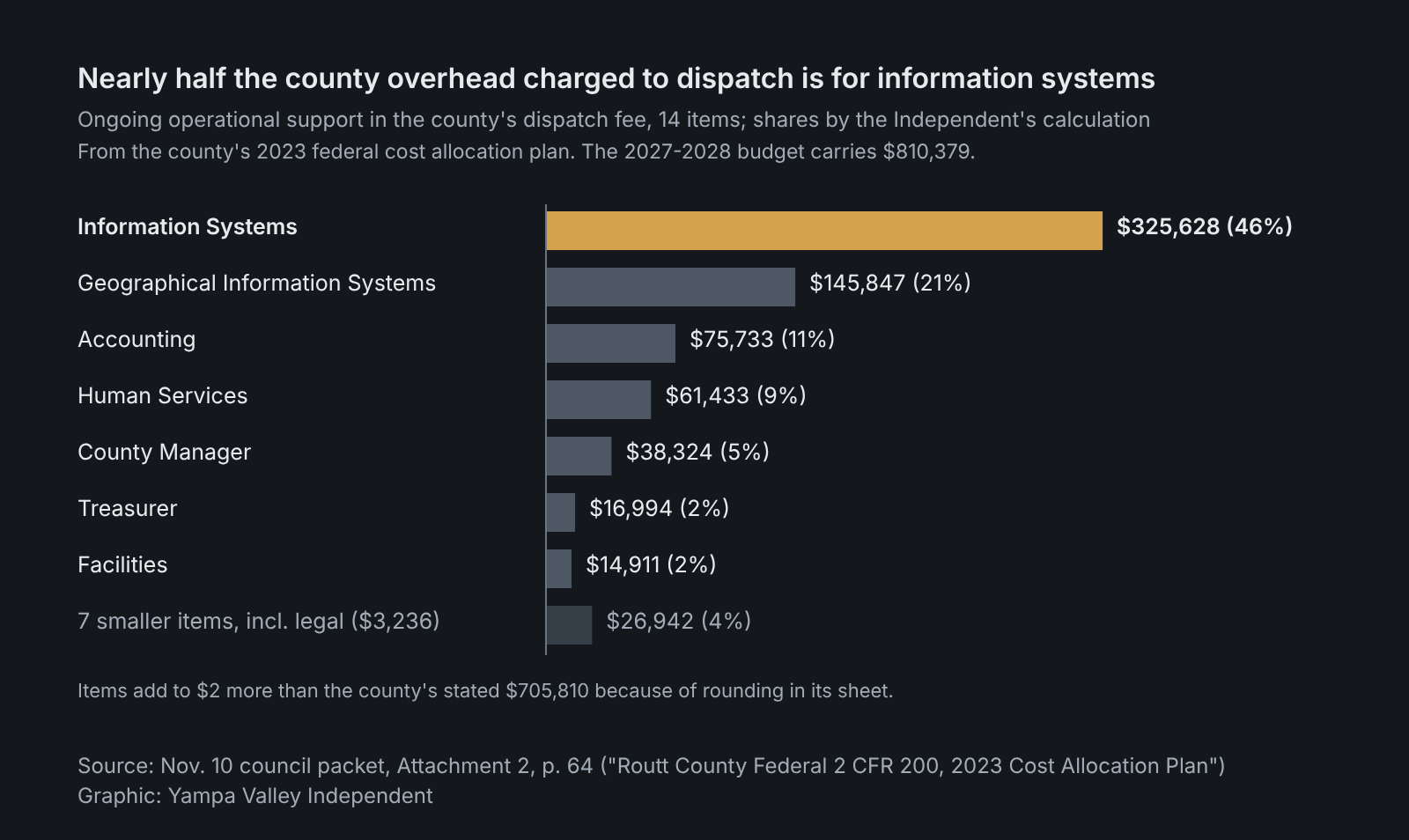
The county's cost sheet lists $705,810 of overhead, nearly half of it for information systems and $3,236 for legal services; the budget the city's estimate uses for 2027 and 2028 carries $810,379.
"I would never approve a document with a vendor" that doesn't limit what can be charged years from now, Weber said.
A council split on how hard to push
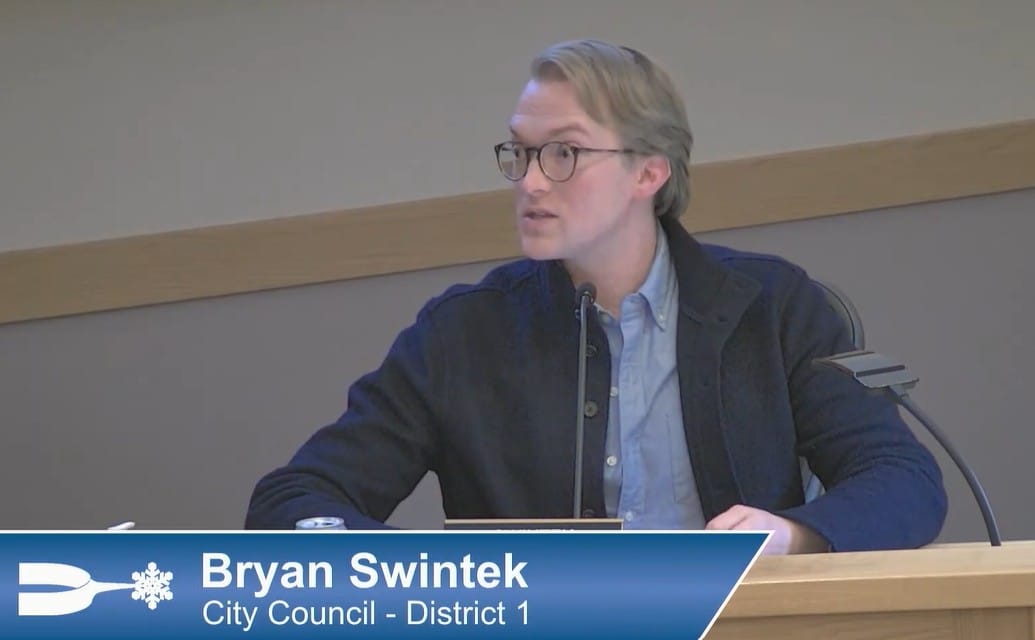
"I feel like the approach to date from the county has been acting like a fee-for-service monopoly," Council member Bryan Swintek said. "We're getting bulldozed."
Another worried about the joint meeting: "I feel like we're going to get into a war of words and they are far more eloquent than I am or anybody else on council is," adding, "two weeks later, I'm signing something I don't like."
"I don't want to sign this agreement the way it sits today," one member said, adding that the county hasn't been "very flexible. In fact, I'm being overly nice."
Council President Steve Muntean put the frustration plainly: the county's overhead charge felt like "being told a story that, oh, this is just normal. But really the subtext here is we need to find space in our budget."
City residents are "paying for this three different ways," one official said, through property tax, 911 fees and now sales tax, while county residents pay through the first two. "We're getting sort of tripled."
"My default is I'm happy to play nice in the sandbox," Swintek said, pointing to remarks a county commissioner had made to council, but "why am I giving this to you if you're also not going to play nice in the sandbox?"
Members sparred over the overhead, too. One said it "may be completely justifiable." Another answered, "I have done these budgets for $50 million organization, and that's not how we allocate indirect costs."
Some were unsure what the joint meeting would settle. "It seems like it's a complicated enough issue that we might just end up butting heads for an hour," Council member Dave Barnes said, though he added that council needed to talk it through with the county's decision-makers.
Others urged patience. One said nobody on council disputes paying "our fair share of the dispatch fee"; another spoke of "a level of trust" in a center the county has long run; and Council member John Agosta said he was optimistic about next week's meeting.
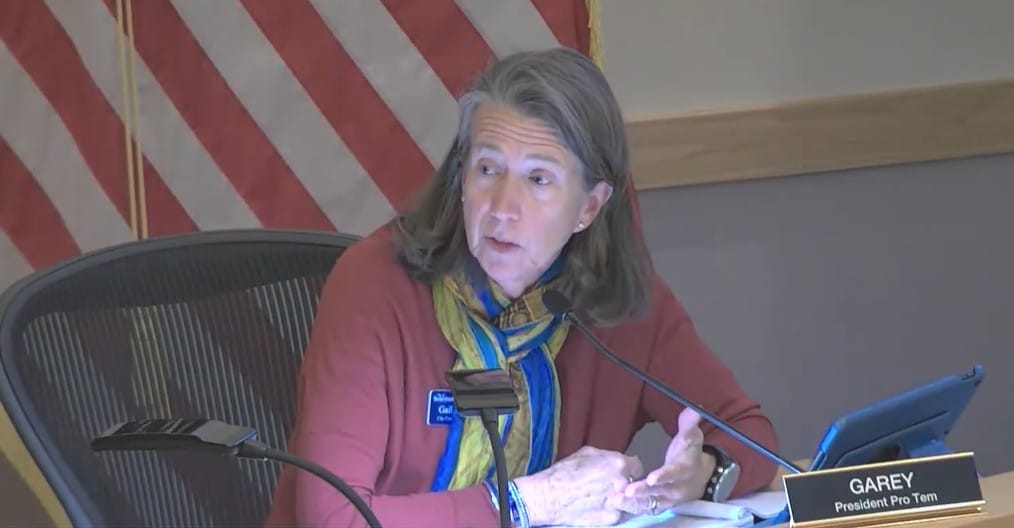
The split showed at the Oct. 6 budget retreat. There, according to the minutes council approved Tuesday, Commissioner Sonja Macys thanked staff for budgeting $800,000 for dispatch, said stakeholders need to work together on a regional dispatch model, said it would cost the city more to run its own and warned that not signing would bring "lack of coordination and delays in service for residents." Swintek called that a "professional threat," the minutes say, adding that it was not a partnership and that no other municipalities were being asked to pay. (The staff memo says Hayden is, for now, the only other member that contributes financially.) Later, the minutes record, he wanted to "cease negotiations and not allocate the funds," while council members Barnes, Gail Garey and Michael Buccino spoke for keeping the money in the budget or continuing to work with the county. After the retreat, the city cut its 2027 police dispatch budget by $280,906 "following Routt County's adjustment for the 2027 Dispatch fees" and added $86,807 for fire.
Council had an executive session on the dispatch fee on its agenda but didn't hold one. Foote said there was little legal advice to add and that elected officials needed to talk directly about "the possibility that... we are at loggerheads."
This story is based on the city's video of the Nov. 10 meeting, city and county records, and the county's written answers to the Independent's questions on Nov. 10. Before the meeting, city spokesperson Mike Lane wrote that he'd rather let council's discussion take place first and offered to follow up.
What's next
Council and the county commissioners hold an hour-long joint meeting Tuesday, Nov. 17. The tentative agenda lists dispatch, the regional transportation authority's transition and tobacco; a council member said dispatch would take most or all of the hour. Council wants its president to speak for it and asked staff for written position statements before then. The 2000 agreement stays in effect until the city or the county ends it, on 90 days' notice.
The meeting starts at 5 p.m. in the Citizens' Meeting Room at Centennial Hall, 124 10th St., and on Zoom, according to the tentative agenda; the city says its meeting packets are typically posted by 1 p.m. the Friday before.
Disclosure: During public comment at the Nov. 10 meeting, the Independent's reporter, Anna Parashina, asked Council member Bryan Swintek to correct an Oct. 24 email in which he wrote that her name is a pen name.
Correction, Nov. 12, 2026: An earlier version of this story attributed to Council member Bryan Swintek a quote about city residents paying "three different ways" for dispatch. The speaker has not been confirmed, and the quote is now attributed to a city official. This version also removes two council remarks whose speaker or meaning could not be confirmed, clarifies that Steamboat has not signed the agreement, and adds the county's and Swintek's stated reasons.