
Steamboat has fewer young adults, and young workers hold a smaller share of Routt jobs in a tourism-heavy economy that pays below the state average
Census and federal labor data show fewer young adults in Steamboat, a smaller share of jobs held by young workers in Routt County, jobs concentrated in tourism industries that pay below the county average, and home values that far exceed local pay.


Key points
- Steamboat had 9.7% fewer residents ages 18 to 34 in 2020 than in 2000, while Colorado had 30.7% more, by the Independent's calculation from census counts. In 2023, workers 29 and younger held 24.6% of Routt County's jobs, down from 30% to 34% in 2002 through 2008; statewide, their share fell from about 27% to 23.4%.
- Since 2006, Routt's population grew 15.9% and its jobs 11.9%, by the Independent's calculation. Measured to 2023 from 2009 or any later year, jobs grew faster.
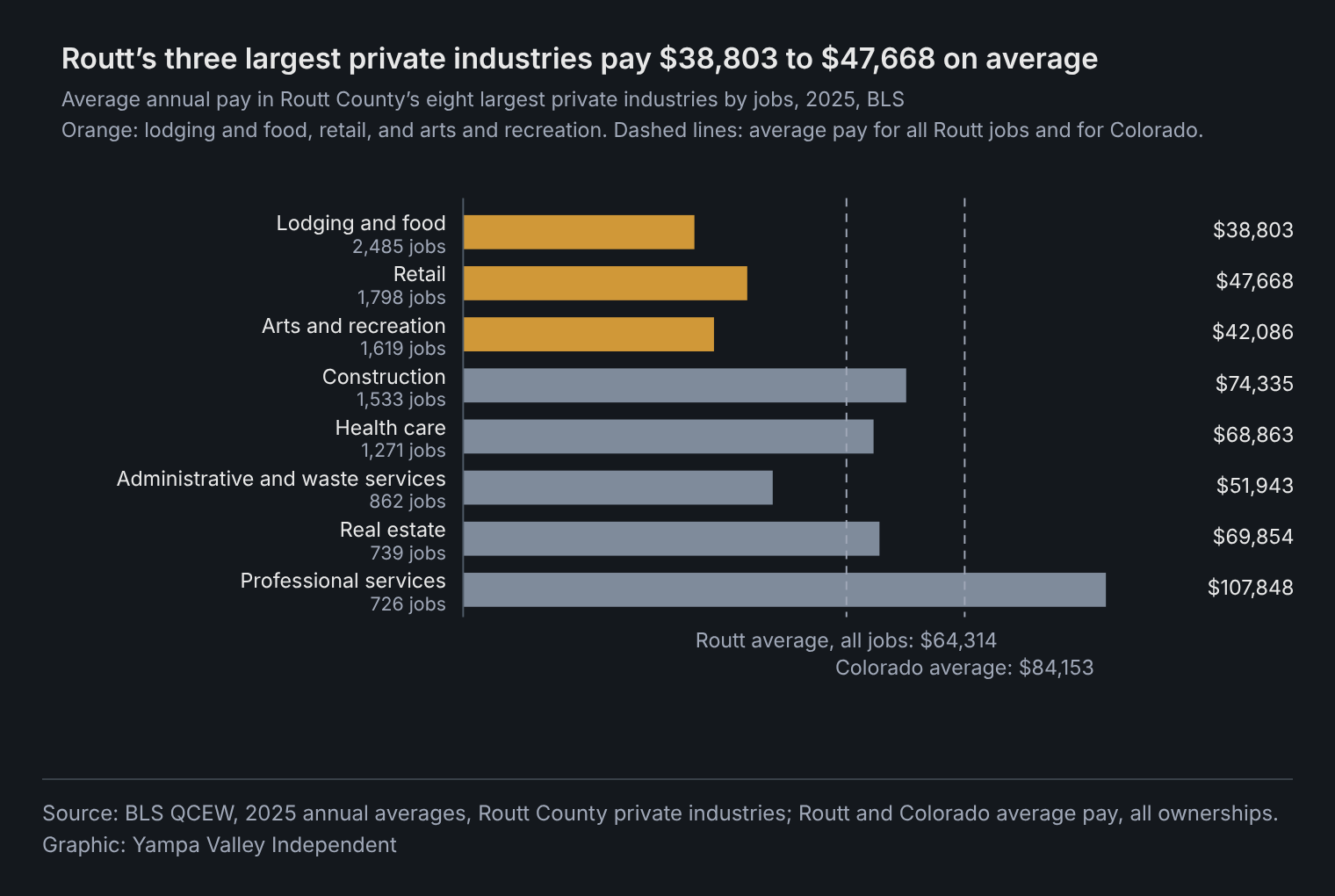
- Lodging and food, arts and recreation, and retail held 42.8% of Routt's private jobs in 2025, against 25.4% statewide, and paid $38,803 to $47,668 on average. The county's average pay was $64,314, or 76% of Colorado's, by the Independent's calculation.
- U.S. skier visits grew 23% from the 1978–79 season to 2024–25, and 67% in the Rocky Mountain region, by the Independent's calculation. Colorado Ski Country USA's preliminary estimate put last season's statewide visits at 10.5 million, down from a projected 13.8 million.
- A median Routt home is valued at 14.2 years of the county's 2024 average pay, against 6.7 statewide. Home values are 58% higher than Colorado's and 2024 pay 25% lower, by the Independent's calculation.
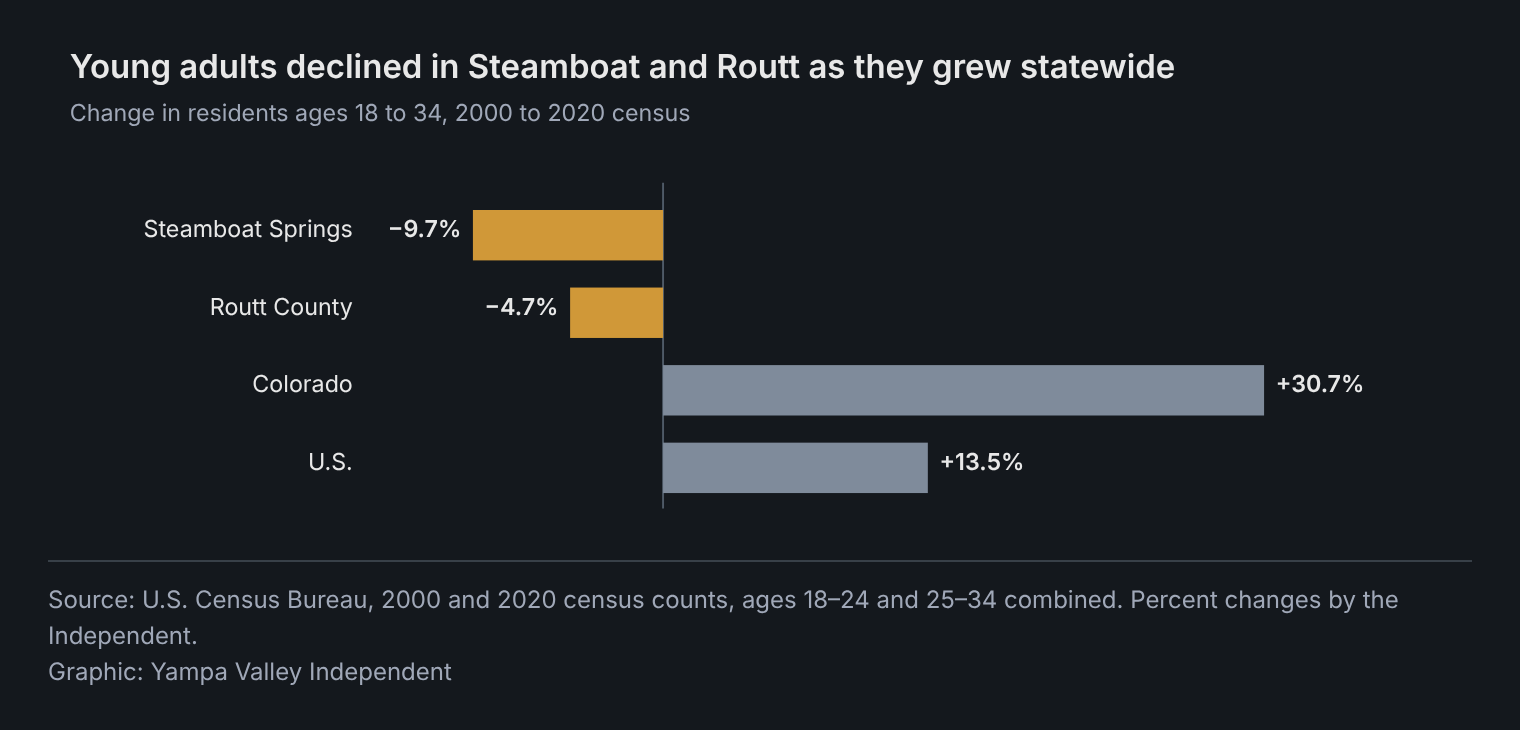
Steamboat Springs had 9.7% fewer residents ages 18 to 34 at the 2020 census than in 2000, while Colorado's population in that age group grew 30.7%, by the Independent's calculation from U.S. Census Bureau counts.
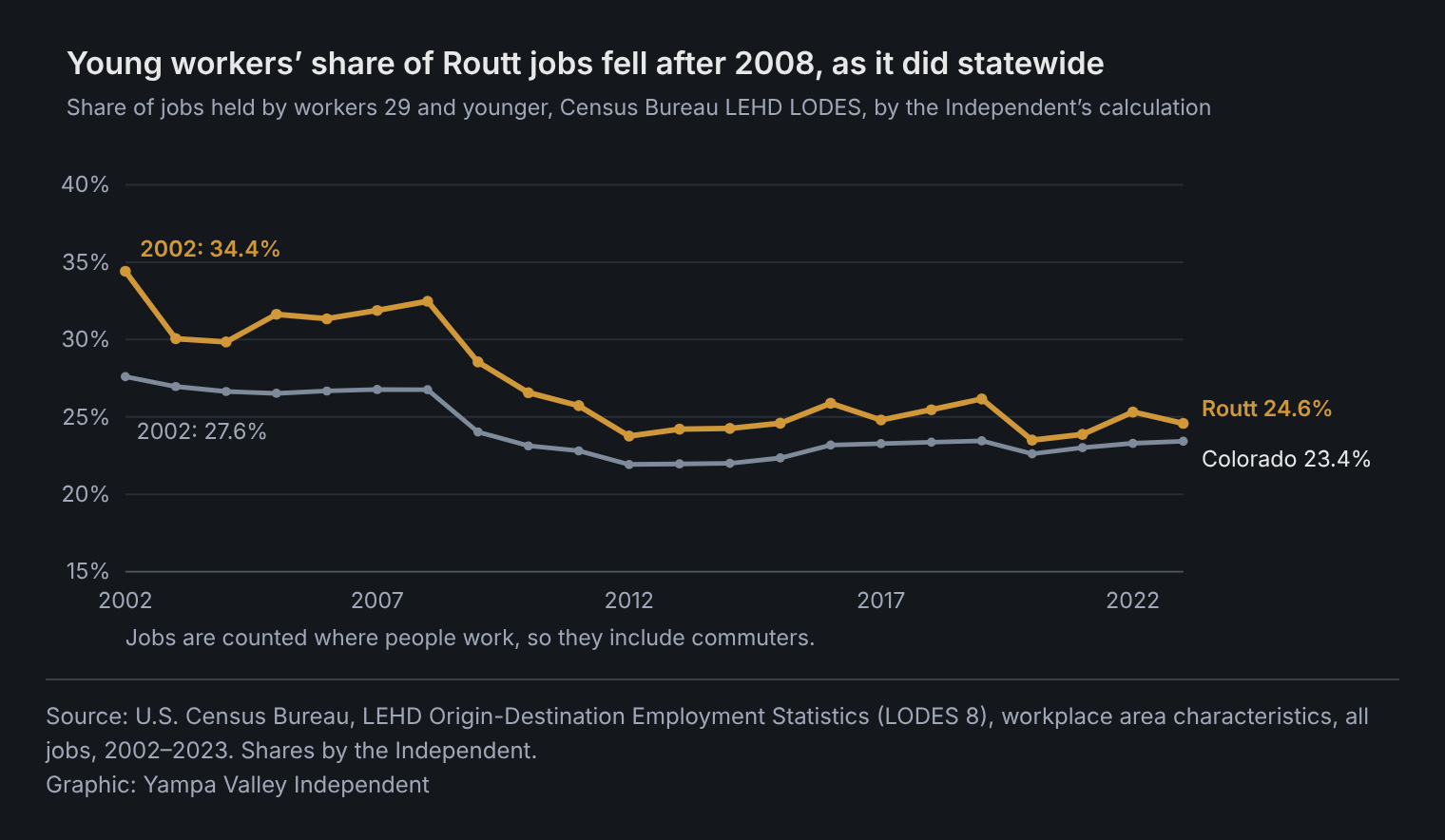
Federal job data show a similar shift among workers. Workers 29 and younger held a smaller share of Routt County's jobs in 2023 than in 2002 through 2008, as they did statewide. Routt's jobs remain concentrated in tourism industries that pay well below the county average, and home values sit far above local pay.
The records can't say why any one person moved away, stayed or never arrived, and the Independent did not interview residents or employers for this story. Read together, they describe a county where young adults are a smaller share of residents and workers than two decades ago, the industries with the most jobs pay less than average, and home values far exceed local pay.
Fewer young adults and young workers
Countywide, the number of adults ages 18 to 34 fell 4.7%, and their share of residents dropped from 27.4% to 20.7%, by the Independent's calculation. Nationally, the age group grew 13.5%. Steamboat had 4.8 times as many residents 65 and older in 2020 as in 2000, by the Independent's calculation. Colorado had 2.1 times as many, and the nation 1.6 times.
The shift shows up among workers, too, according to the Census Bureau's LEHD Origin-Destination Employment Statistics. From 2002 through 2008, workers 29 and younger held 29.8% to 34.4% of the jobs in Routt County, above their 26.5% to 27.6% share statewide. Their share in Routt fell after 2008 and has stayed between 23.5% and 26.2% since 2012, by the Independent's calculation. In 2023 it was 24.6%, close to the state's 23.4%; the statewide share also fell over that time. Workers 55 and older held 22.9% of Routt's jobs in 2023, up from 8.5% in 2002; statewide, their share rose from 12.4% to 22.2%.
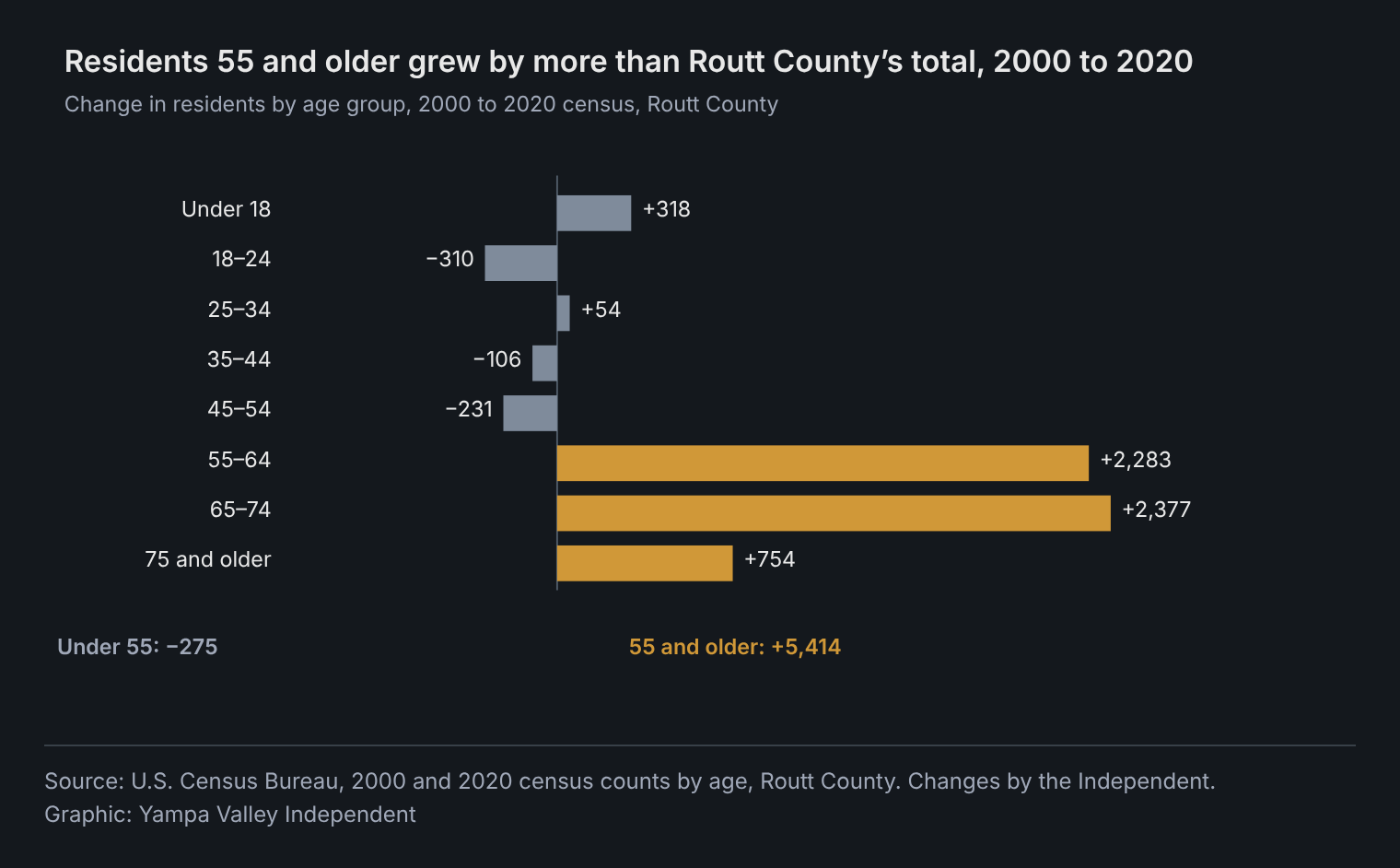
Routt County grew from 19,690 residents in 2000 to 24,829 in 2020, a gain of 5,139. Residents 55 and older grew by 5,414. Those under 55 fell by 275, by the Independent's calculation from census age tables. The counts can't say how much of that came from newcomers and how much from residents aging in place. Within the city, which grew by 3,409, residents 55 and older grew by 2,841 and those under 55 by 568.
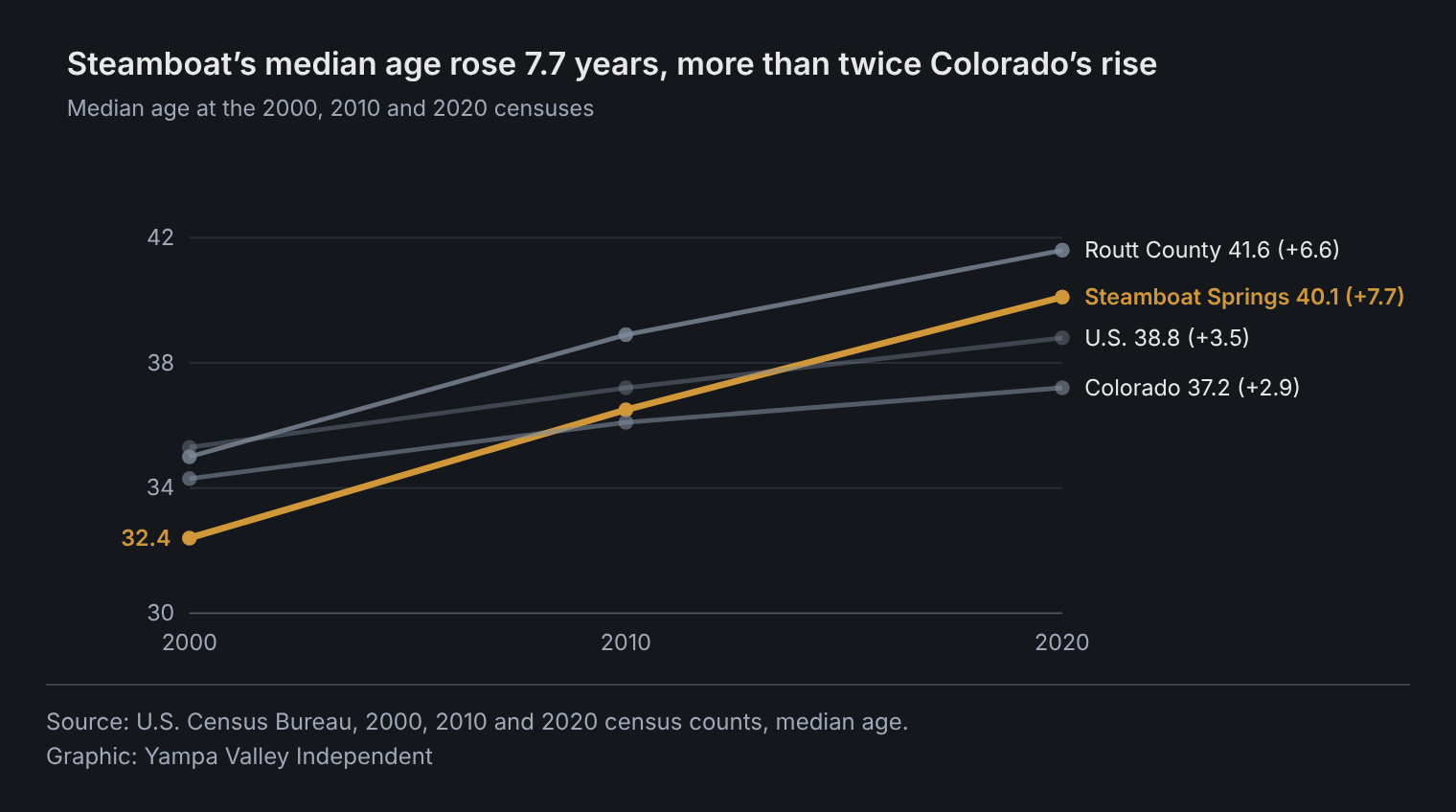
The city's median age rose from 32.4 at the 2000 census to 40.1 in 2020, according to U.S. Census Bureau counts. Colorado's rose from 34.3 to 37.2 and the nation's from 35.3 to 38.8.
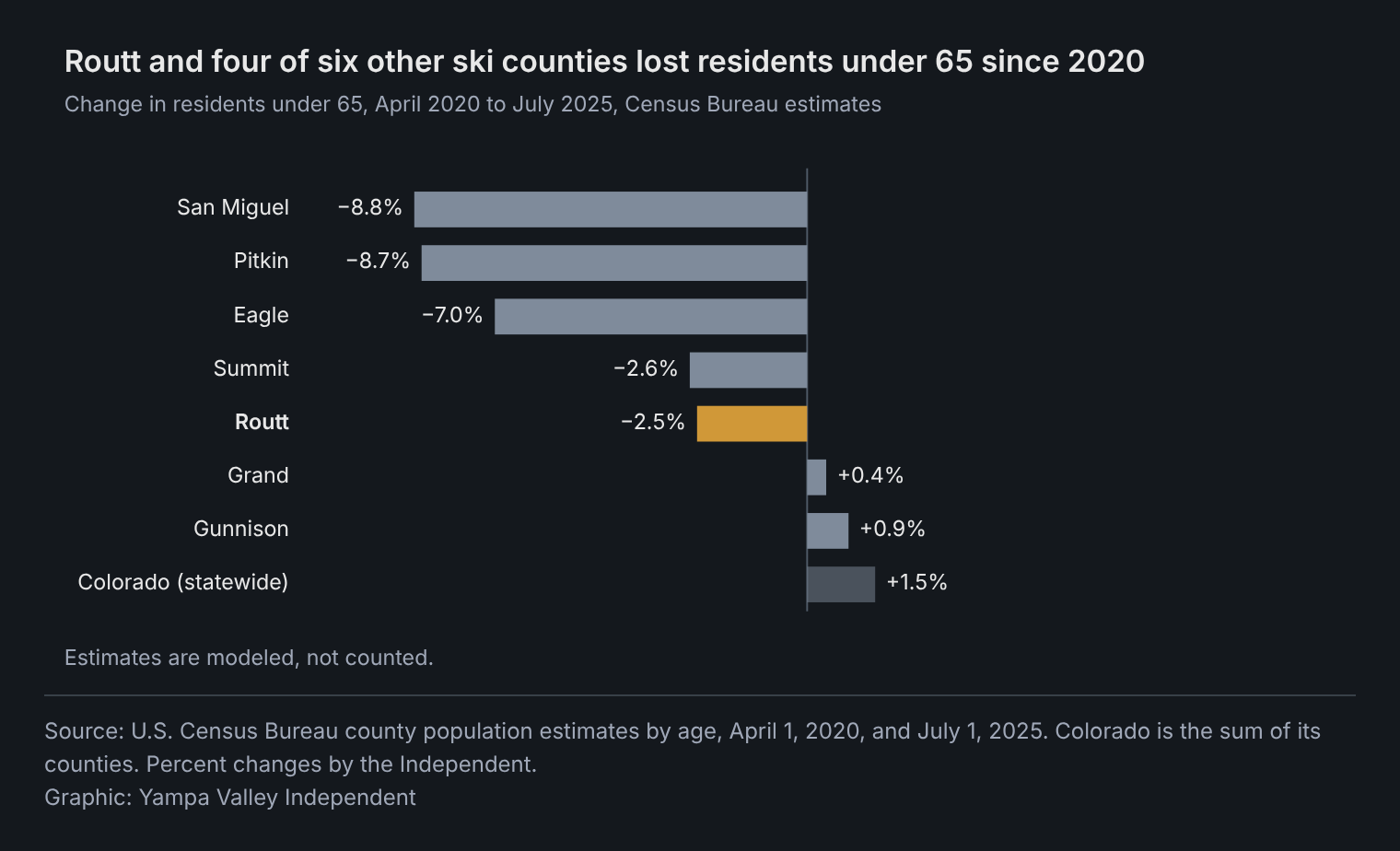
Census estimates since 2020 show the same pattern in Routt and four of six other ski counties. From April 2020 to July 2025, Routt's population under 65 fell 2.5%, or 512 people, while its population 65 and older grew 24.5%, or 1,012. Under-65 populations also fell in Eagle (7.0%), Summit (2.6%), Pitkin (8.7%) and San Miguel (8.8%) counties, and rose slightly in Grand (0.4%) and Gunnison (0.9%). Statewide, they rose 1.5%. The estimates are modeled, not counted.
Over 20 years, job growth has not kept pace with population
Routt County averaged 15,403 jobs in 2007, according to the U.S. Bureau of Labor Statistics' count of jobs covered by unemployment insurance. The count fell to 12,829 in 2010, the lowest since at least 2001, and didn't regain its 2007 level until 2018. It dipped below that level again in 2020 and 2021. In 2025, it averaged 16,323.
Since 2005, the county's population has grown faster than its jobs. From 2006, the year before the pre-recession job peak, to 2025, population grew 15.9% and jobs 11.9%, by the Independent's calculation from Census Bureau estimates and BLS job counts. From 2001 to 2025, population grew 25.3% and jobs 21.0%. From 2007 to 2023, population grew 12.4%, or 2,799 people, while jobs grew 7.0%, or 1,073. The county had 67 jobs per 100 residents in 2001, 68 in 2007, 55 in 2010 and 64 in 2025.
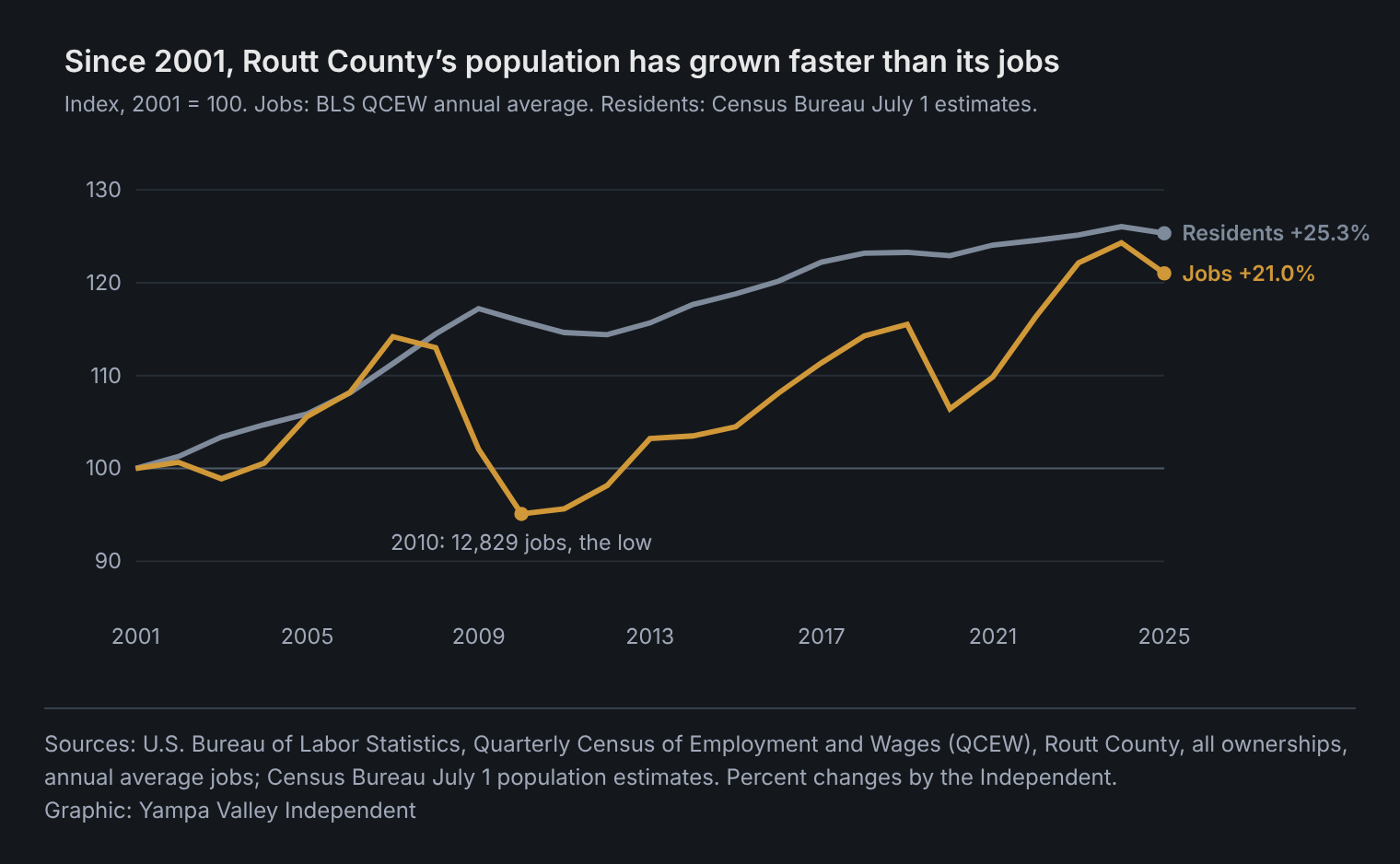
The comparison depends on the starting year. Measured to 2023, population grew faster than jobs from 2001, 2002 and 2005 through 2008. From 2003, 2004 and every year from 2009 on, jobs grew faster, by the Independent's calculation.
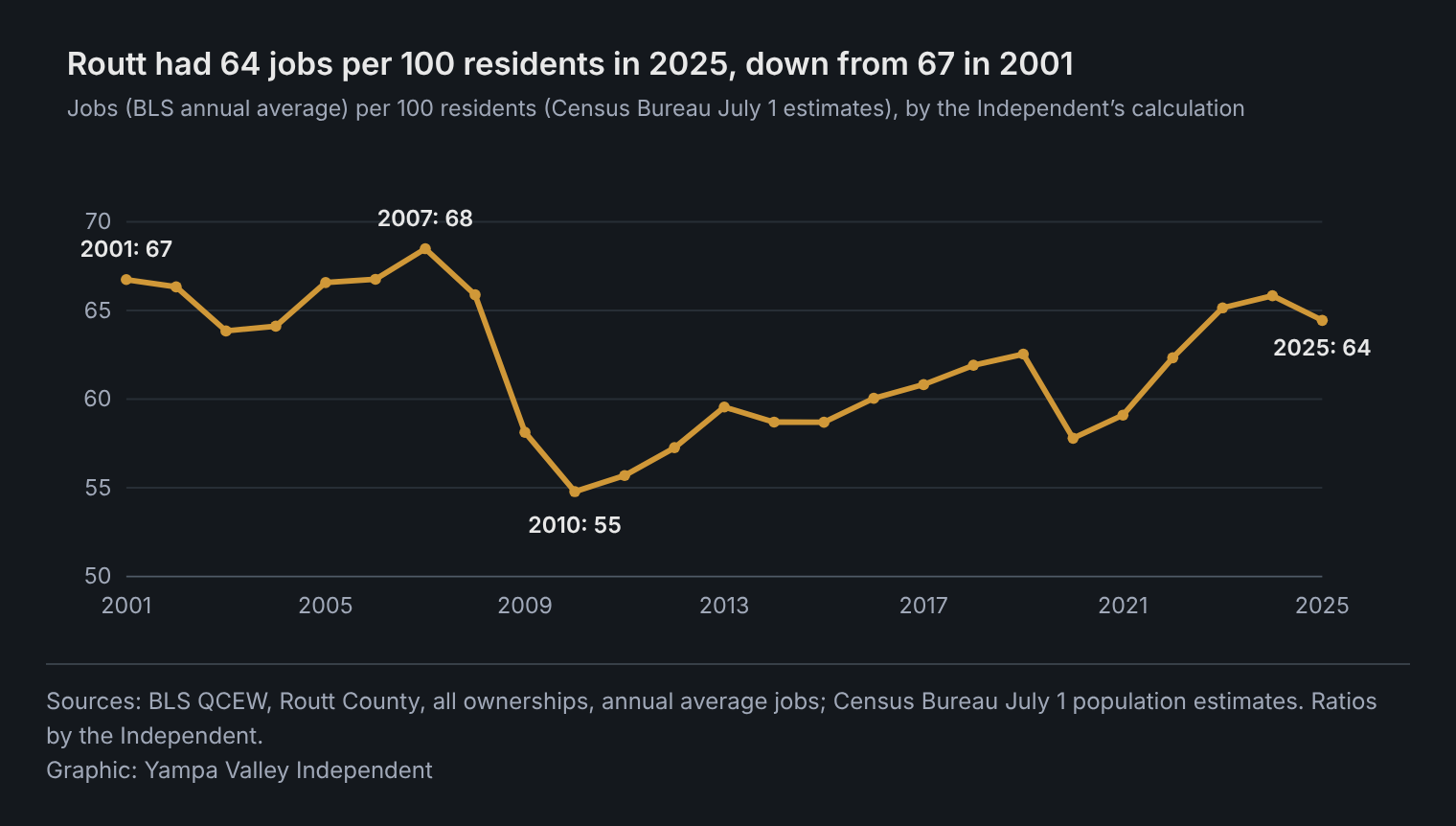
The BLS count leaves out the self-employed, counts a person with two jobs twice and counts jobs where people work, including commuters, so jobs per resident isn't an employment rate. Population figures between censuses are Census Bureau estimates.
Tourism-tied industries hold a large share of jobs and pay less
In 2025, 42.8% of Routt's private-sector jobs were in accommodation and food services; arts, entertainment and recreation, which includes ski areas; and retail. Statewide, the share was 25.4%, and nationally 24.2%, by the Independent's calculation. Routt's share has stayed between 41.6% and 43.8% every year since 2014 except 2020, when it dipped to 40.2%. Other ski counties run higher: Summit (60.8%), Grand (60.6%), Pitkin (56.7%), San Miguel (56.6%), Gunnison (47.1%) and Eagle (45.2%).
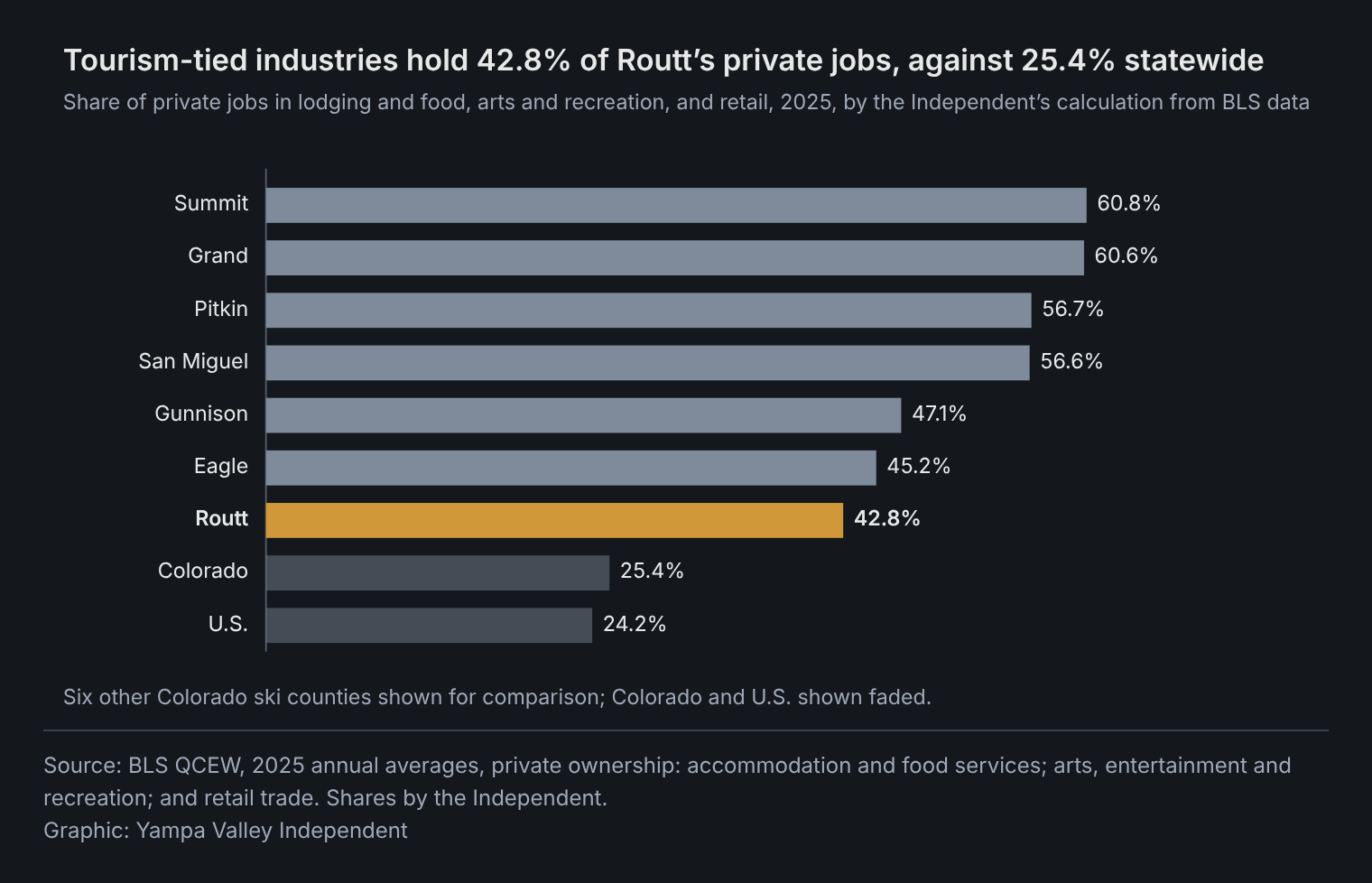
Those three are Routt's largest private industries, with 5,902 jobs in 2025; government had 2,519. Their average annual pay ranged from $38,803 to $47,668. Mining paid an average of $128,913 in 2025, but its jobs fell from 428 in 2014 to 232.
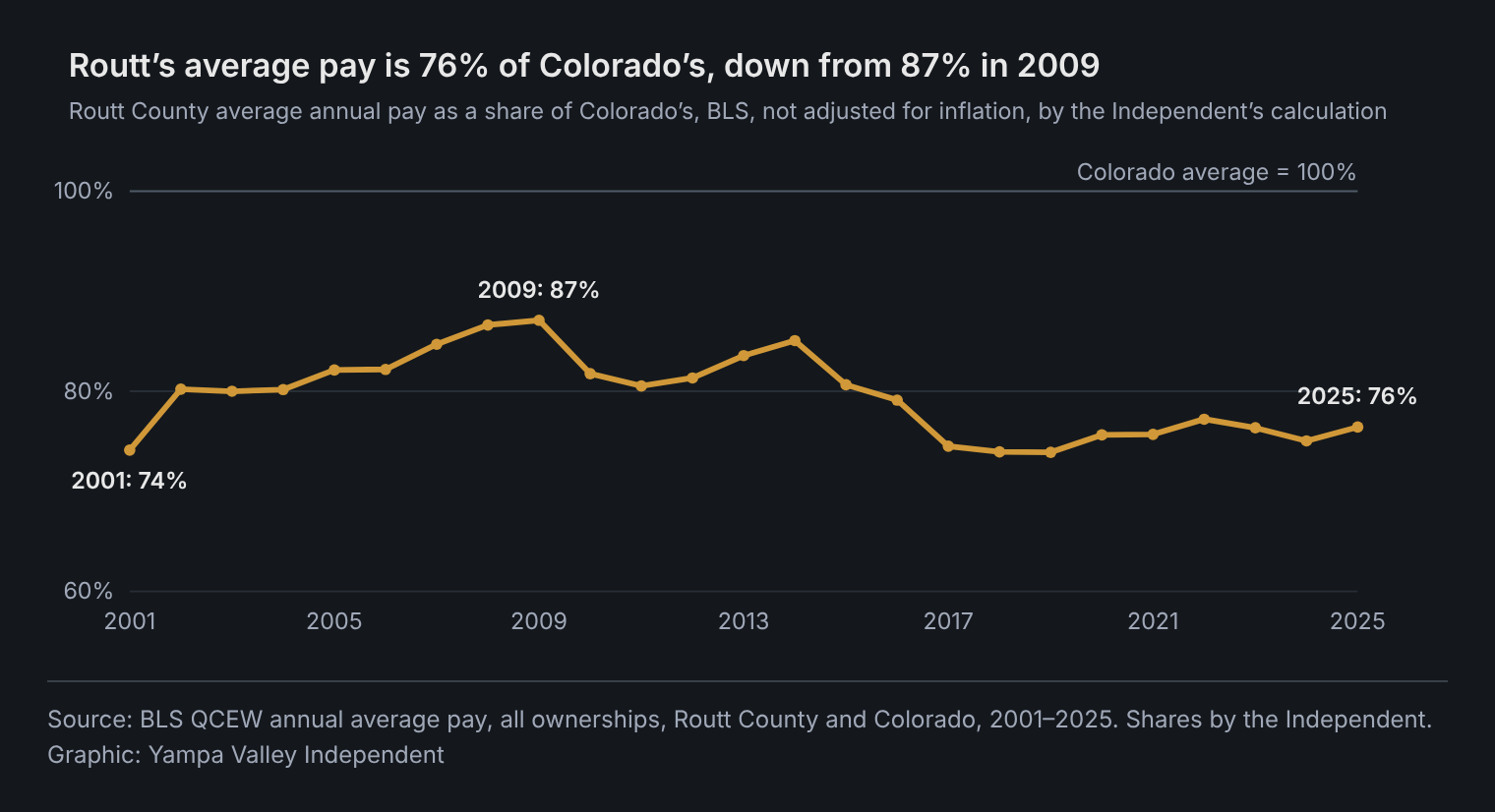
Routt's average annual pay in 2025 was $64,314, or 76% of Colorado's $84,153, by the Independent's calculation. The share was 74% in 2001, peaked at 87% in 2009, fell to 74% in 2019 and has been 75% to 77% since 2020. Average pay is total wages divided by jobs, so part-time and seasonal work pulls it down, and it isn't adjusted for inflation.
Incomes grew more unequal
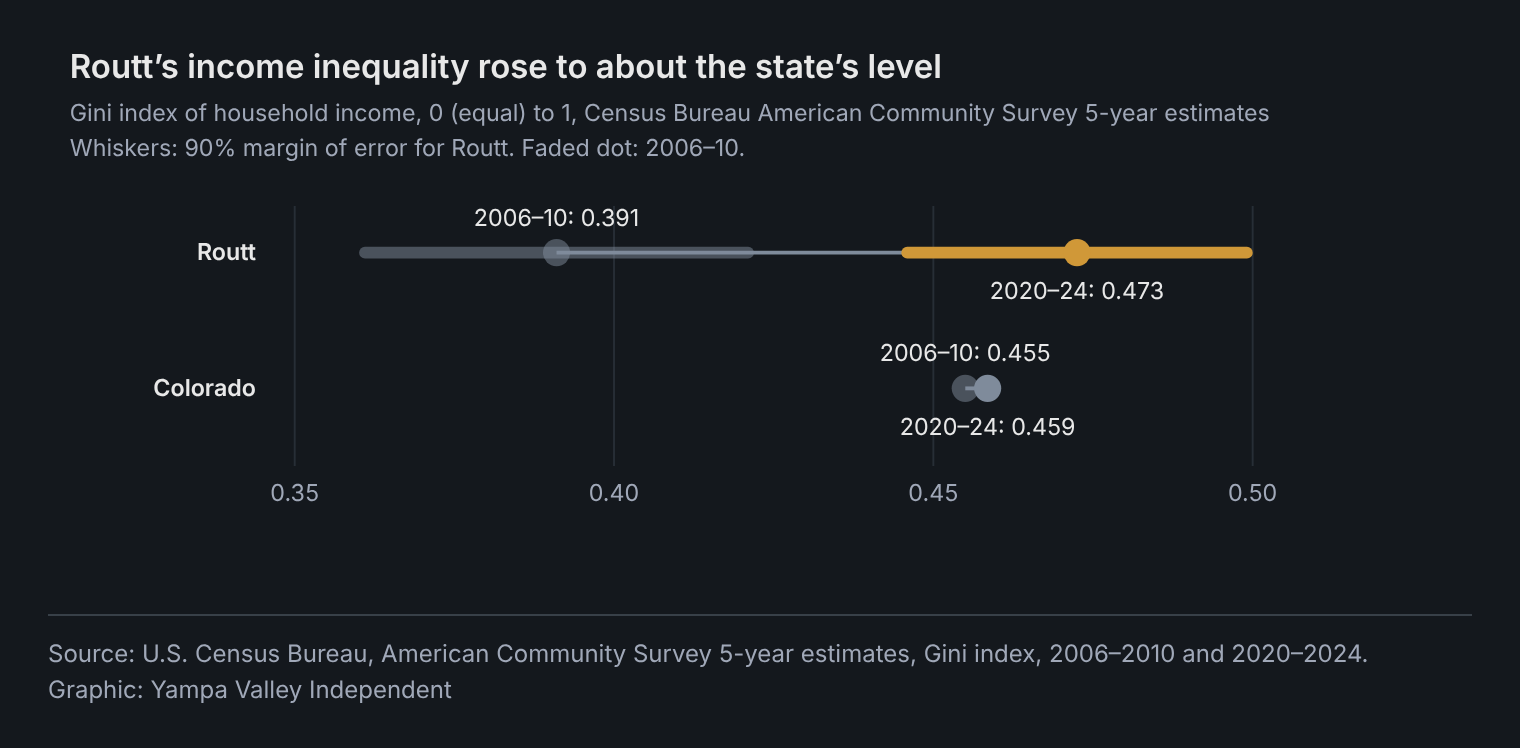
Household incomes have grown more unequal. Routt's Gini index, the Census Bureau's measure of income inequality from 0 (equal) to 1, rose from 0.391 in the 2006–2010 American Community Survey to 0.473 in 2020–2024. That increase is statistically significant at the 90% confidence level, by the Independent's calculation from the survey's margins of error. Colorado's index was 0.455 and 0.459, so Routt went from below the state's level to about the same.
Skier visits: slow growth nationally, a down season in Colorado
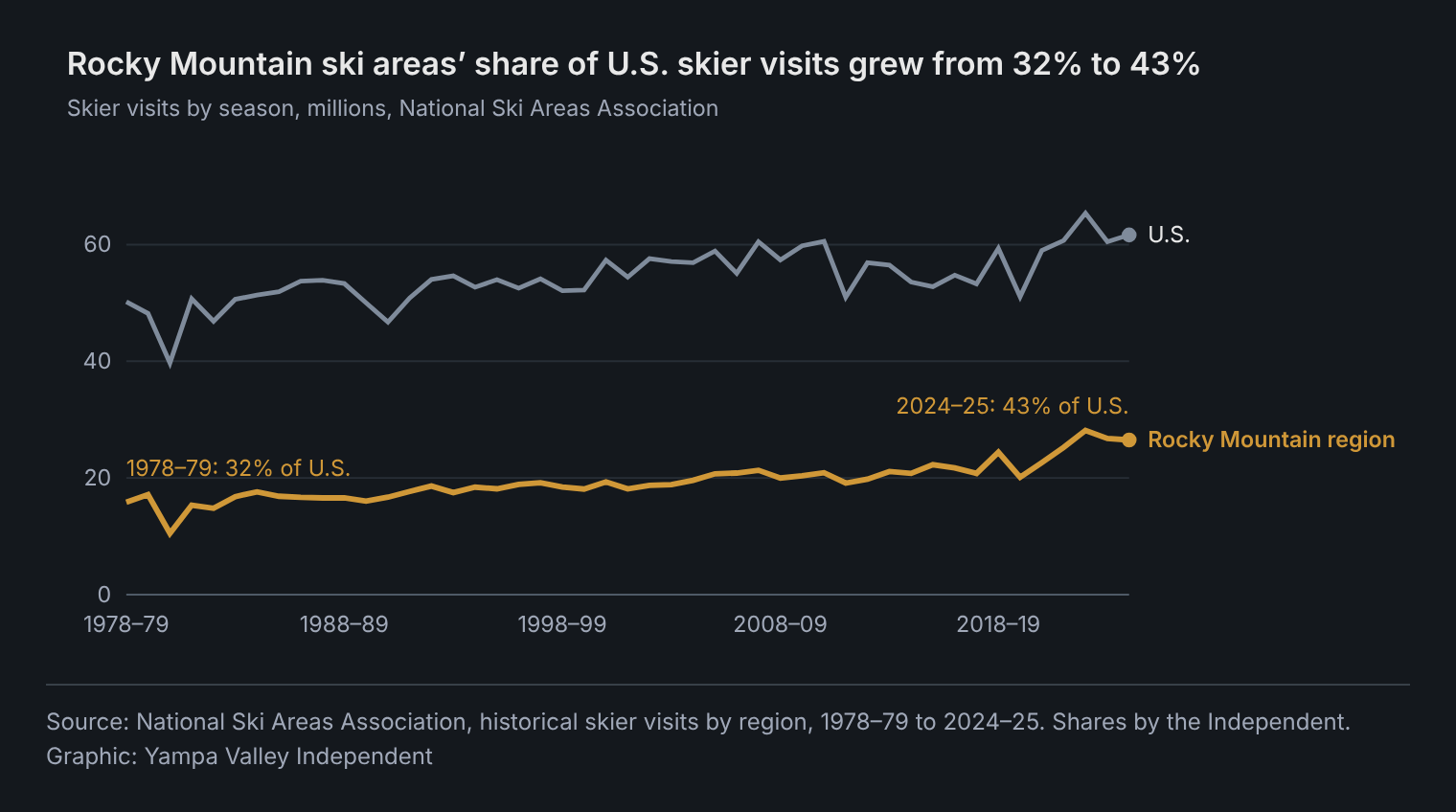
U.S. skier visits rose from 50.2 million in the 1978–79 season to 61.6 million in 2024–25, according to the National Ski Areas Association, or 23%, by the Independent's calculation. Visits in its Rocky Mountain region rose 67%, from 15.8 million to 26.5 million, and grew from 32% to 43% of the national total. The number of U.S. ski areas operating fell from 529 in 1992–93 to 492 in 2024–25.
Last season, Colorado's visits fell sharply. In a preliminary estimate, Colorado Ski Country USA projected 10.5 million statewide skier visits in 2025–26, down from a projected 13.8 million the season before. It said average days open fell to 129 from the 20-year average of 144, and visits fell more than 20% below the five- and 10-year averages.
Last winter's snowpack peaked at the lowest levels on record at two federal snow stations near Steamboat, Rabbit Ears and Dry Lake, the Independent's companion story found. City sales tax collections from December through April were 5.0% below the year before, by the Independent's calculation; the city's reports don't give a reason.
The housing gap reflects pay as well as prices
Home values sit far above local pay. Routt's median owner-estimated home value in the 2020–2024 survey equaled 14.2 years of the county's 2024 average pay, or 13.1 to 15.3 years given the survey's margin of error, against 6.7 years statewide, by the Independent's calculation.
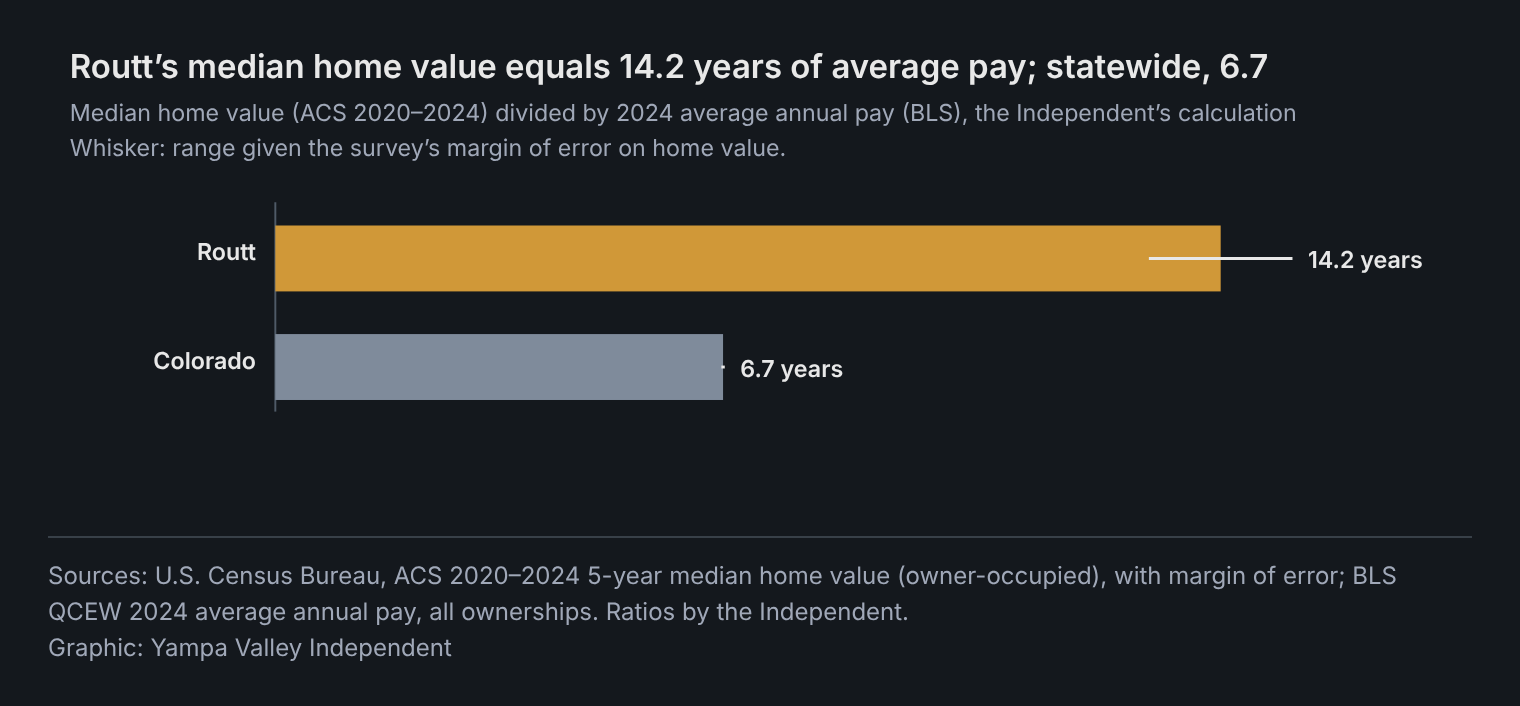
The gap reflects both higher prices and lower pay. Routt's median home value of $854,700 was 58% higher than Colorado's $539,400, and the county's 2024 average pay of $60,252 was 25% lower than the state's $80,287, by the Independent's calculation. Average pay is total wages divided by jobs, so part-time and seasonal work pulls it down, and it isn't household income.
What the housing study says
The Yampa Valley Housing Authority's 2025 Housing Market and Demand Study, prepared by Economic & Planning Systems and RRC Associates, makes a different comparison. "Since 2010, population grew at an average pace of 0.5% per year while jobs grew at nearly 4 times that rate, at 1.9% per year," its executive summary says. It adds, "From 2015-2023, Routt County added about 2,300 jobs compared to 1,200 full time residents (population)."
The Independent's figures are close to the study's for those periods. From 2010 to 2023, jobs grew 28.4% and population 8.0%. From 2015 to 2023, the county added 2,383 jobs and 1,280 residents.
The result depends on the starting year. The 2010 job count, in a census year, was the lowest since at least 2001, 2,574 jobs below 2007. Measured from 2001, 2002 or 2005 through 2008, population grew faster than jobs through 2023. Measured from 2009 or later, jobs grew faster. The study also says Routt County "is aging faster than the state," which the census counts support.
The Independent did not contact YVHA or the study's authors for this story.
What the numbers can't show
The figures show patterns, not causes. They don't say why young adults left or didn't move here, whether better-paying jobs would keep them, or how future winters will go. Answering those questions would take surveys and interviews with residents and employers, which this story did not include.
How we did this
The Independent used census counts for 2000, 2010 and 2020 from data.census.gov; Census Bureau population estimates; the BLS Quarterly Census of Employment and Wages, all ownerships, annual averages; the 2006–2010 and 2020–2024 American Community Surveys; the Census Bureau's LEHD Origin-Destination Employment Statistics for jobs by worker age, 2002–2023; and published figures from the National Ski Areas Association and Colorado Ski Country USA. Percent changes, ratios and shares are the Independent's calculations from those figures. Steamboat Springs means the city; job and pay figures are for Routt County. The data and calculations are in the story's backup folder.
Disclosure: Emily McLarney, the wife of Independent editor and owner Michael McLarney, serves on the City of Steamboat Springs' Ad Hoc Housing Advisory Committee, which reviews requests for the city's short-term rental tax funds.
This is one of two data stories the Independent is publishing on Steamboat's economy and climate. The other looks at October's warm, rainy start to the snow season on Buffalo Pass.
What's next
- The Census Bureau's next five-year American Community Survey, covering 2021–2025, will update the home-value figures. The Independent will update this story when it is released.
- The Independent's companion story looks at October's snow and rain on Buffalo Pass.
Sources: U.S. Census Bureau census counts for 2000, 2010 and 2020 (data.census.gov), population estimates by age and county totals, 2000s intercensal estimates and 2010s intercensal estimates, American Community Survey home values and Gini index, and LEHD Origin-Destination Employment Statistics; U.S. Bureau of Labor Statistics Quarterly Census of Employment and Wages; National Ski Areas Association skier visits and ski areas; Colorado Ski Country USA; the Yampa Valley Housing Authority's Housing Market and Demand Study executive summary; USDA Natural Resources Conservation Service SNOTEL data; and City of Steamboat Springs monthly tax reports for December, January, February, March and April.