
Yoga before the slopes: What it does for balance, and what research hasn't shown about ski injuries
Studies suggest yoga can improve balance, but we found no study testing whether it prevents ski injuries. What the research does show, and where to find gentler classes near Steamboat.

Key points
- Steamboat Resort's opening day is scheduled for Saturday, Nov. 21, and orthopedic surgeons tell skiers to be in good physical condition before they go.
- The knee is the most commonly injured body part in alpine skiing, at 27% to 41% of injuries in studies covered by a 2019 review.
- Studies suggest yoga can improve balance, but no study the Independent found tests whether it prevents ski injuries. Strength and landing training cut ACL injuries from 1 in 54 to 1 in 111 in studies of young female athletes.
- After skiing, reviews find stretching does little for next-day soreness. One small study found less soreness among women who already practiced yoga.
- Two local studios run heated classes, and a federal health agency says hot yoga carries extra risks of overheating and dehydration. Several places offer unheated, gentle or restorative classes.
Steamboat Resort's opening day is scheduled for Saturday, Nov. 21.
Before that first run, the American Academy of Orthopaedic Surgeons tells skiers to be "in good physical condition."
Yoga is one option close to home: the Independent's health guide lists seven yoga and Pilates studios in Steamboat Springs, plus yoga classes at Old Town Hot Springs and the Hayden Center. Studies suggest yoga can improve balance, and one small study found it improved flexibility. What researchers haven't shown is that yoga by itself prevents ski injuries.
Why skiers' knees take the hits
The knee is the most commonly injured body part in alpine skiing, at 27% to 41% of all injuries in the studies covered by a 2019 review in the journal Sports Health. The most common knee injuries are sprains of the anterior cruciate ligament, or ACL, and the medial collateral ligament, or MCL.
Hitting something is rarely the cause. In a survey of injured skiers cited by the review, collisions with objects or other skiers accounted for only 2% of ACL injuries. Risk factors researchers have identified include being female and, in a 10-year study of young ski racers, lower core strength.
Timing matters, too. The orthopedic surgeons' group says many ski injuries happen at the end of the day, "when people try to get in one last run," and that most of those can be prevented by keeping in good physical condition and stopping when tired or in pain.
What yoga can do before the season
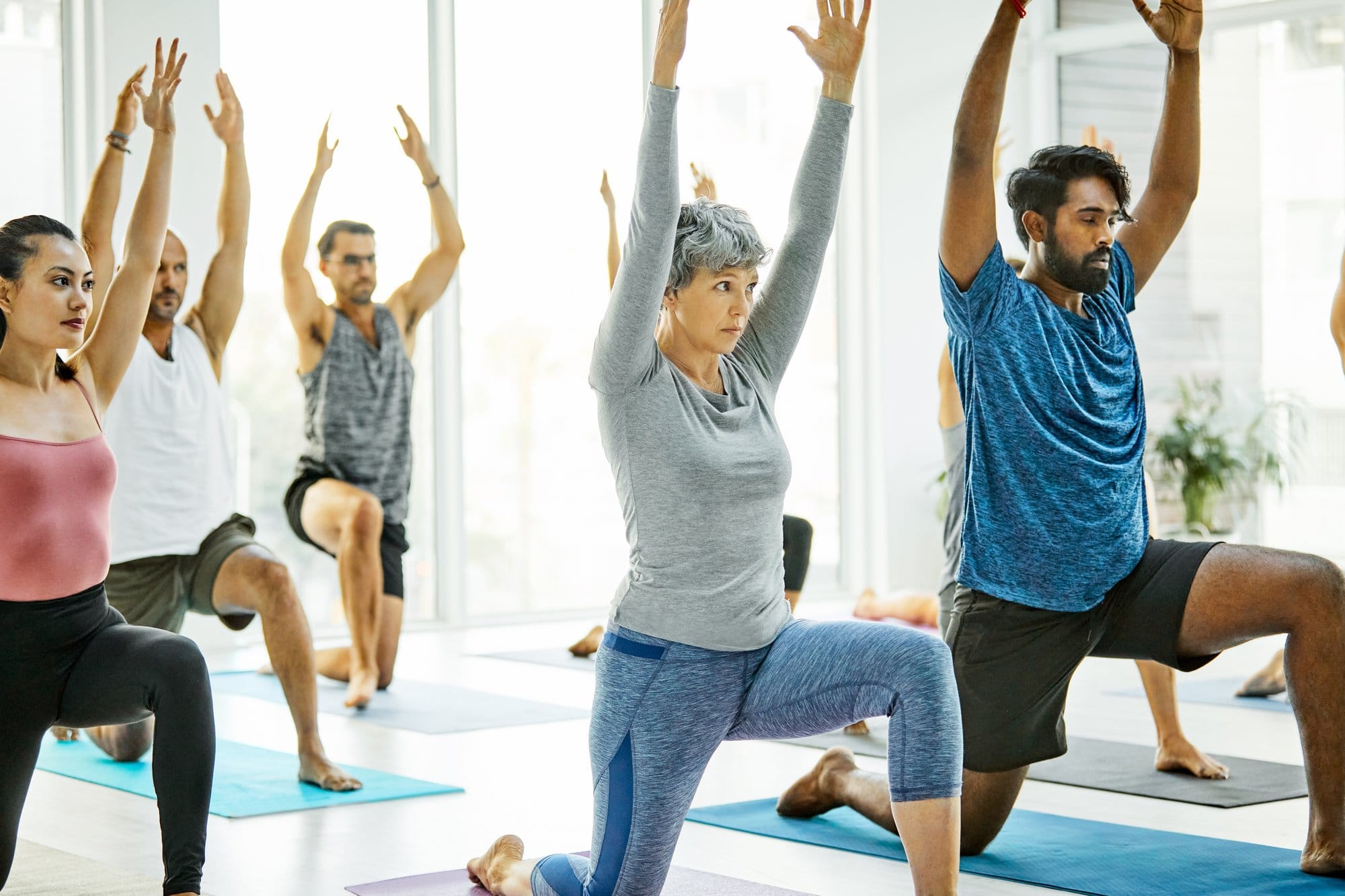
In a 2016 study of 26 male college athletes, the 14 who added two hour-long yoga sessions a week for 10 weeks improved on flexibility and balance tests; the 12 who didn't showed no significant change. The authors called it a preliminary study. It wasn't randomized: soccer players did the yoga and baseball players didn't, and the yoga group started with weaker balance scores.
The National Center for Complementary and Integrative Health, a federal agency, cites a 2014 review in which 11 of 15 studies of yoga in healthy people showed improvement in at least one measure of balance.
Stronger evidence on knee injuries, though not from skiers, comes from a different kind of workout. Neuromuscular training, which drills leg strength and controlled landings, cut ACL injuries from 1 in 54 athletes to 1 in 111 in a 2019 analysis of 18 studies of young female athletes, with 27,231 participants. The benefit was larger for middle and high school athletes than for college and professional athletes. Programs did better when each session included more lower-body strength work and landing drills, and the authors recommend exercises such as Nordic hamstring curls, lunges and heel-calf raises.
A broader 2014 analysis of 25 randomized trials, with 26,610 participants, found no injury-prevention benefit from stretching, while strength training, balance training and programs combining them lowered injury risk. Its categories were strength training, stretching, balance training and combinations of them; yoga wasn't one of them.
Among skiers, the evidence is thinner. In a Swiss study, 71 youth ski racers who were offered a weekly program of hamstring, hip and trunk exercises had lower rates of traumatic and overuse injuries than 58 racers in an earlier comparison group, though the share of skiers with a traumatic injury didn't differ significantly. A Swedish study of ski high school racers found 12 ACL injuries among 305 skiers during two seasons of core-stability and neuromuscular exercises, or 3.9%, compared with 35 among 431 skiers, or 8.1%, in earlier seasons without them. The Swiss researchers wrote that evidence-based injury prevention programs for youth racers "are widely absent."
The 2019 review, published before the Swiss and Swedish studies, called a different approach "the only proven intervention" to reduce severe knee injuries, and it isn't exercise at all. In the 1993-94 season, patrollers and instructors at 20 ski areas watched videos of how knee injuries happen. Serious knee sprains among them fell 62% from the two previous seasons, while staff at 22 ski areas without the training saw no decline. The review notes that the participants were ski area employees and that a similar study hadn't been done in the general population.
A search of the Europe PMC research database turned up no study testing whether yoga prevents injuries in skiers.
After a day on the mountain
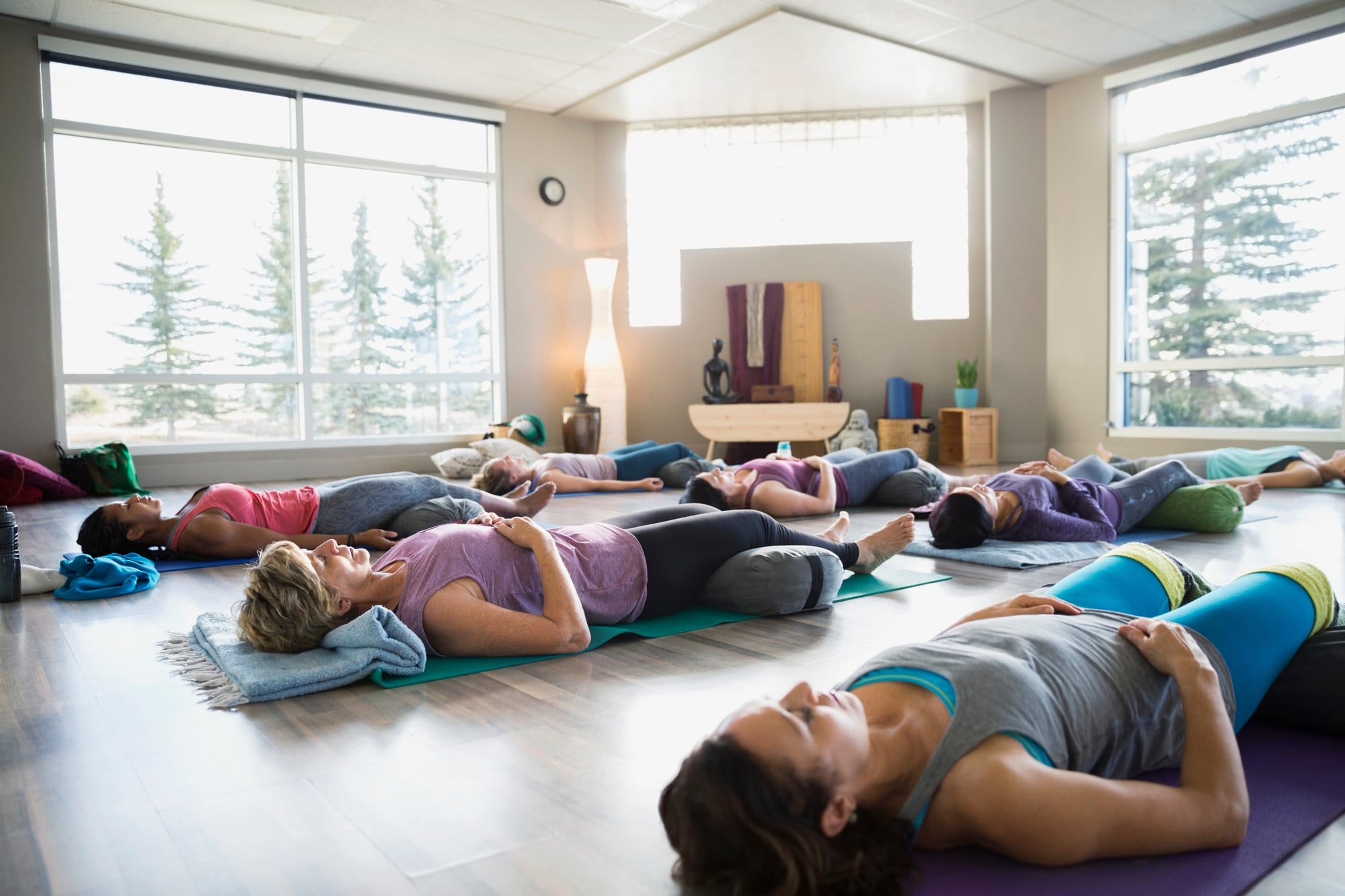
For sore legs, the research on stretching is discouraging. A 2011 Cochrane review of 12 studies concluded that the evidence suggests stretching before or after exercise "does not produce clinically important reductions" in muscle soreness in healthy adults. A 2018 analysis of 99 studies of recovery methods found no significant effect of stretching on soreness or fatigue. Massage "seems to be the most effective method" for soreness and fatigue, it found, and active recovery, compression garments and water immersion also eased soreness.
Yoga isn't the same as stretching alone, and one small study is more encouraging. In a 2004 study of 24 women, those who already practiced yoga reported less soreness after a bench-stepping workout designed to make legs sore than women who didn't do yoga. In the yoga group, soreness the next day was lower after a yoga class than before it: 11.1 millimeters versus 21.4 on the study's soreness scale. The study didn't assign anyone to yoga, and the before-and-after class comparison had no comparison group.
Yoga may also help with stress. The federal center cites a 2020 review of 12 studies in healthy adults that found beneficial effects of yoga on perceived stress in all of them.
Before you roll out a mat
The federal center calls yoga generally safe for healthy people when done properly with a qualified instructor. It says injuries can occur, mostly sprains and strains, but serious injuries are rare and the risk is lower than for higher-impact activities. It warns that hot yoga "has special risks related to overheating and dehydration" and says pregnant women should avoid it. Pregnant women, older adults and people with health conditions, including knee or hip injuries or balance problems, should talk with their health care provider and the instructor about changing poses, it says.
Two studios in the Independent's health guide, Out Here Yoga and Rakta Hot Yoga, run heated classes. At Out Here, every class is in a 95-degree room except Total Recovery, which isn't heated, according to the guide.
If you go: gentler yoga classes near Steamboat
These places list unheated, gentle or restorative classes, the kind a skier might look for after a day on the mountain. Details are from the Independent's health guide, which checked each listing against the studio's website Nov. 9, and Out Here Yoga's pricing page, checked Nov. 16.
- Out Here Yoga, 685 Marketplace Plaza, Suite C2: Total Recovery (unheated); other classes are in a 95-degree room. Drop-in $34; visitors' week $65; new locals 15 days $45.
- Harmony Yoga & Wellness, 2550 S. Copper Frontage Road, Unit 208: all-levels classes built around breath, alignment and a long final rest; not listed as heated. Drop-in $25; intro week $45.
- Rakta Hot Yoga, 1169 Hilltop Lane, Suite 202A: restorative class in a heated-class studio (ask whether it's heated). 5 classes $130; unlimited month $155.
- Old Town Hot Springs, 136 Lincoln Ave.: gentle and chair yoga, vinyasa. Adult day pass $35, classes included unless the schedule says otherwise.
- Hayden Center, 495 W. Jefferson Ave., Hayden: gentle yoga, restorative hatha yoga. Classes included with membership ($53 a month); guest day pass $10.
Schedules change, so check each studio's booking page before you go. No business paid to be listed.
This story is based on published research, health guidance from a federal agency and an orthopedic surgeons' group, and studios' own websites.